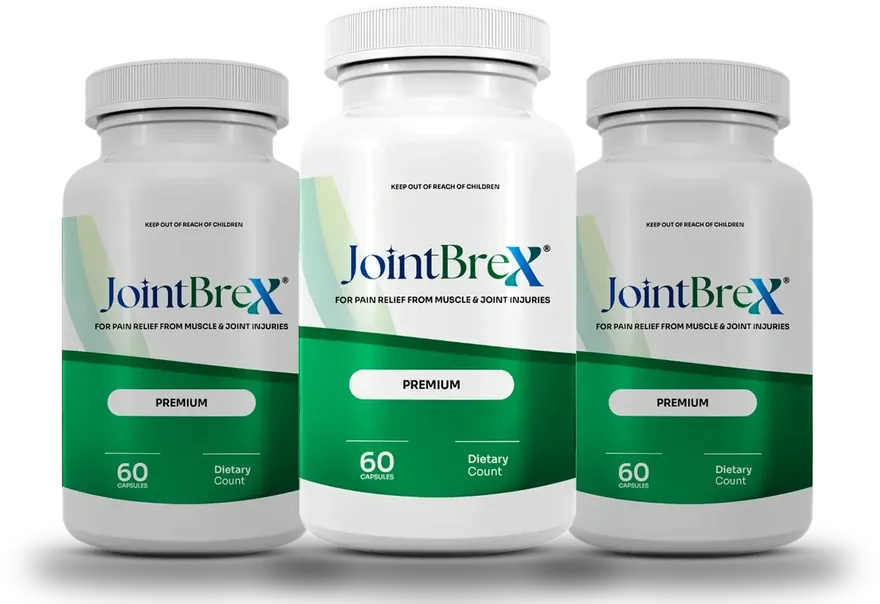
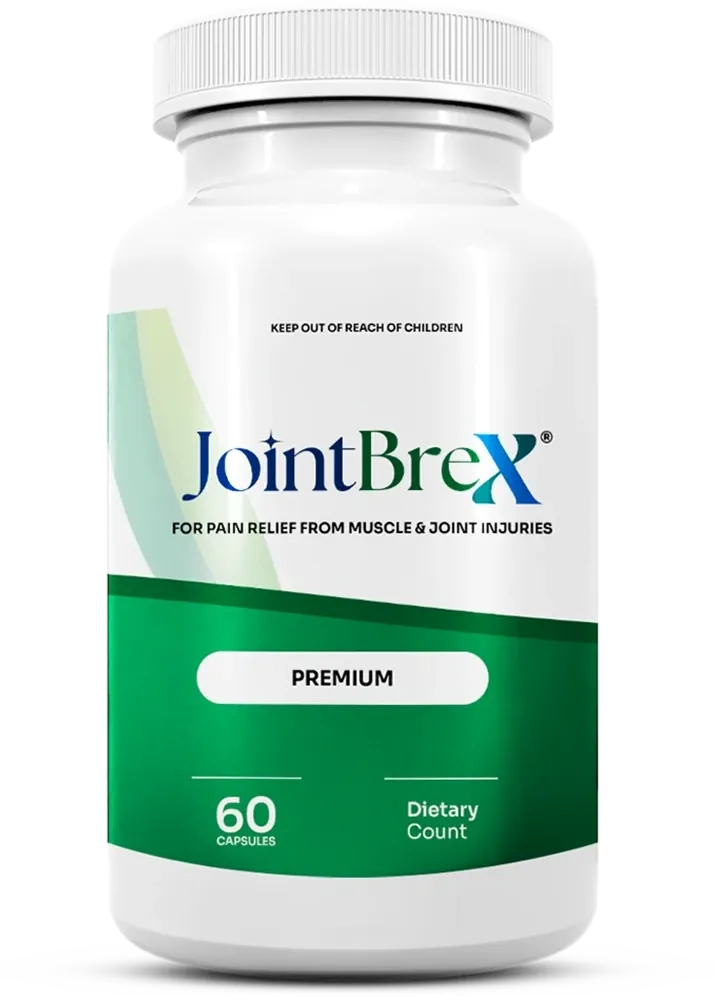
What the GAIT Trial Actually Found
GAIT, an NIH-funded trial of 1,583 patients, found glucosamine and chondroitin did not significantly beat placebo for knee pain over 24 weeks at 1,500 mg and 1,200 mg a day. A smaller, moderate-to-severe subgroup showed a positive result the investigators themselves called preliminary. A two-year follow-up found no structural benefit either.
A trial big enough that nobody has run a bigger one since
If you have read a sales page for a glucosamine and chondroitin product in the last fifteen years, there is a good chance you have read a sentence built on one trial without ever seeing its name. That trial is GAIT, and it is worth knowing what it actually found, because the honest version and the marketing version tell two different stories from the same set of numbers.
Who ran it, and how it was built
GAIT stands for the Glucosamine/chondroitin Arthritis Intervention Trial. It was funded by the National Institutes of Health, not by a supplement company, and it ran at 16 centers across the United States, enrolling 1,583 people with painful knee osteoarthritis. Nobody has run a larger, better-funded trial of these two ingredients since it published in 2006 Clegg et al., 2006.
The design put five groups side by side for 24 weeks, which is the part sales copy tends to compress into "clinically tested."
| Group | What they took |
|---|---|
| Placebo | An inactive pill, indistinguishable from the study agents |
| Glucosamine alone | Glucosamine hydrochloride |
| Chondroitin alone | Chondroitin sulfate |
| Glucosamine plus chondroitin | Both, at the same doses used alone |
| Celecoxib | A prescription anti-inflammatory, included as a known-effective comparator |
That fifth arm matters more than it looks. Celecoxib was not there to be beaten. It was there so that if glucosamine and chondroitin did nothing, the trial would still be able to show it could detect something that does work, ruling out "the trial was just badly run" as an excuse for a null result.
The trial was randomized and double-blind, meaning neither the patients nor the clinicians assessing their pain knew which pill a given person was actually taking, a design specifically meant to prevent expectation from inflating the result on either side. Funding came from the National Institute of Arthritis and Musculoskeletal and Skin Diseases, part of the NIH, not from a company that sells glucosamine or chondroitin, which is worth noting given how often industry funding turns up as a caveat elsewhere in this literature.
The doses GAIT actually tested
The doses matter as much as the design, because they are the number most marketing quietly leaves out.
| Ingredient | Dose used in GAIT | Schedule |
|---|---|---|
| Glucosamine hydrochloride | 1,500 mg a day | 500 mg three times daily |
| Chondroitin sulfate | 1,200 mg a day | 400 mg three times daily |
Those figures are not disputed; the 2008 follow-up study restates the identical dosing when describing the same cohort two years later Sawitzke et al., 2008. Any product that quotes GAIT as support for its formula is implicitly inviting a comparison against these two numbers, whether or not the product actually reaches them.
What the primary result actually showed
Here is the part a lot of marketing skips straight past: over 24 weeks, neither glucosamine, nor chondroitin, nor the combination of the two produced a statistically significant improvement in knee pain compared with placebo, across the trial as a whole Clegg et al., 2006.
What placebo did
About 60 percent of the placebo group reached the trial's threshold for a meaningful pain reduction. Placebo response in osteoarthritis pain trials is typically large, and GAIT was no exception.
What celecoxib did
About 70 percent of the celecoxib group reached that same threshold, a difference from placebo large enough to be statistically significant. This is the arm that proved the trial could detect a real effect.
Glucosamine, chondroitin and the combination landed close enough to the 60 percent placebo response that none of the three cleared the bar celecoxib cleared. That is the headline finding of the largest trial of these two ingredients ever run, and it is a negative one, on the question the trial was actually designed to answer.
A large placebo response is not a flaw specific to this trial; it shows up across most osteoarthritis pain research, partly because pain is self-reported and partly because simply enrolling in a study and being monitored closely tends to nudge people's reported symptoms downward for a while. GAIT's design accounted for that by including celecoxib specifically as a check on the trial's own sensitivity, and celecoxib clearing that bar while the two supplement ingredients did not is the detail that makes the negative result hard to explain away as a measurement problem.
The subgroup result, and why the investigators themselves flagged it
Inside a negative overall trial, the investigators also looked at a smaller slice: participants who started the trial with moderate-to-severe pain, roughly 22 percent of the total group. In that slice, the combination of glucosamine and chondroitin showed a response rate around 79 percent, against about 54 percent on placebo, a gap that did reach statistical significance Clegg et al., 2006.
The GAIT authors did not present the subgroup result as a confirmed finding. They described it as exploratory, arising from a subgroup the trial was not statistically powered to test on its own. A result found by slicing a large trial into a smaller piece after the fact carries a real risk of being a chance finding, which is exactly why the people who ran the study called it preliminary rather than proven.
That caveat is not a technicality. A trial powered for 1,583 people is built to detect a real effect across that whole group reliably. A subgroup of about 350 people, pulled out after the data came in, is a much smaller and noisier sample, and a single positive result from it is a hypothesis worth testing again, not a conclusion to build a marketing claim on.
There is also a statistical reason "underpowered" is not a small word to skip past. A trial designed to detect a difference across 1,583 people can miss, or falsely find, a difference in a slice one quarter that size purely by chance, at a rate the original trial design never accounted for. Run enough subgroup comparisons on a large dataset, by age, by sex, by baseline severity, by knee versus hip, and one of them will often turn up "significant" even if nothing real is going on, simply because that is how chance behaves across many comparisons. GAIT's investigators knew this, which is exactly why their own paper describes the subgroup finding as preliminary rather than as a second confirmed result sitting alongside the main one.
The two-year follow-up nobody quotes
GAIT did not end at 24 weeks for everyone. A subset of the cohort was followed for two years to see whether any treatment slowed the structural progression of knee osteoarthritis, measured by joint-space width on X-ray Sawitzke et al., 2008.
The answer there was also negative. No group, glucosamine, chondroitin, the combination or celecoxib, achieved the predefined, clinically meaningful reduction in joint-space-width loss compared with placebo. In plain terms: over two years, none of the study agents, including the prescription comparator, was shown to slow the physical progression of the disease on imaging. This follow-up gets quoted far less often than the 24-week pain result, probably because it does not offer even a subgroup to point to.
Joint-space width is a standard, imaging-based way to track knee osteoarthritis over time: as cartilage wears down, the visible gap between the bones on an X-ray narrows. Measuring it over two years, rather than relying on how a patient describes their pain, is a more objective check on whether a treatment is doing something structural rather than just changing how a symptom feels week to week. That celecoxib, a drug already shown to reduce pain, also failed to slow that structural measure is a reminder that pain relief and disease modification are two different outcomes, and a product that helps with one is not automatically doing anything for the other.
How a negative trial becomes a selling point through subgroup quoting
Here is how a negative trial turns into a selling point in practice. A sales page states, correctly, that "a major clinical trial found glucosamine and chondroitin produced a 79 percent response rate in patients with moderate-to-severe pain." Every word of that sentence is true. What it leaves out is that the sentence describes an exploratory subgroup inside a trial whose main, adequately powered result was negative, and that the investigators called the subgroup finding preliminary themselves.
Independent summaries of the wider evidence back the "mixed and unresolved" reading, not the "proven" one. The NIH's own research center on complementary health states plainly that despite a substantial amount of research, it remains uncertain whether glucosamine and chondroitin have a meaningful effect on osteoarthritis symptoms or joint structure National Center for Complementary and Integrative Health (NCCIH), 2026. A Cochrane review of chondroitin, pooling 43 trials and about 9,110 participants, found a modest pain benefit but rated the evidence low-to-moderate quality and noted that several of the pooled trials were funded by chondroitin manufacturers Singh et al., 2015. The Arthritis Foundation's own summary describes the evidence as mixed, citing GAIT's largely null result alongside a smaller, later trial with a more favorable outcome Arthritis et al., 2026.
How to spot this pattern yourself, on any product
You do not need a statistics degree to catch this pattern the next time you see it. A short checklist does most of the work.
- Does the claim name the trial, or just say "a clinical study"? A named trial can be checked; an unnamed one cannot.
- Does the claim describe the whole trial, or a subgroup within it? Words like "in patients with moderate-to-severe pain" or "among those who..." are the tell.
- What did the investigators themselves call the finding? "Preliminary," "exploratory" or "underpowered" in the original paper means the finding is a hypothesis, not a conclusion.
- What happened to the trial's main result? If a subgroup number is being quoted instead of the primary outcome, ask why the primary outcome isn't the one being led with.
- Does an independent summary, not funded by a seller, describe the evidence the same way? Government health agencies and Cochrane reviews are a useful check against a single flattering sentence.
What this means for a bottle dosed below GAIT's own numbers
Here is where GAIT becomes directly relevant to a bottle on a shelf rather than a piece of trial history. GAIT's doses were 1,500 mg a day of glucosamine hydrochloride and 1,200 mg a day of chondroitin sulfate, and that trial, at those doses, did not clearly beat placebo on its main question. A product dosed below those numbers is not simply "less studied." It is untested at its own amount, sitting behind a trial that already struggled to show a clear benefit at a higher one.
| GAIT dose | A common label amount | |
|---|---|---|
| Glucosamine | 1,500 mg/day (hydrochloride) | 1,000 mg/day (sulfate form) |
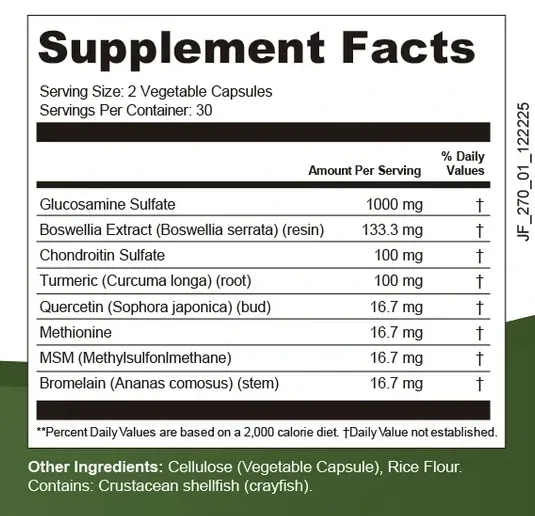
| Chondroitin | 1,200 mg/day | 100 mg/day, about one twelfth of the trial dose |
One more wrinkle: GAIT used the hydrochloride form of glucosamine, and some labels use the sulfate form instead, which occasionally gets treated as a reason the trial "doesn't really apply." It is not much of an escape route. Separate European trials of glucosamine sulfate also cluster around 1,500 mg a day, so switching forms does not close the dose gap on its own; a label supplying 1,000 mg of the sulfate form is still below the dose used in the sulfate literature, not just below GAIT's hydrochloride dose.
None of this means glucosamine and chondroitin definitely do nothing for everyone. It means the largest, best-funded trial of the two ingredients found a negative main result, flagged its one positive subgroup as preliminary, and found no structural benefit at two years, all at doses higher than what many labels actually print. A dose below the trial dose is not automatically inert, but it is also not something GAIT tested, and the trial's own caveats do not get smaller just because the label's numbers do. Full detail on how one specific label's eight ingredients compare with their own trial doses lives on the label dose versus trial dose page, and the ingredient-by-ingredient breakdown is on the ingredients page.
Questions readers ask
What is the GAIT trial?
The Glucosamine/chondroitin Arthritis Intervention Trial, an NIH-funded study of 1,583 patients with knee osteoarthritis, run at 16 US centers for 24 weeks, comparing glucosamine, chondroitin, the combination, celecoxib and placebo.
Did glucosamine and chondroitin work in the GAIT trial?
Not on the main result. None of the three study groups produced a statistically significant improvement in knee pain over placebo across the trial as a whole Clegg et al., 2006.
What doses did GAIT use?
Glucosamine hydrochloride at 1,500 mg a day and chondroitin sulfate at 1,200 mg a day, each split into three daily doses.
What was the positive subgroup result in GAIT?
Among the roughly 22 percent of participants with moderate-to-severe pain at baseline, the combination showed a significantly higher response rate than placebo. The investigators called this finding preliminary because the trial was not statistically powered for that subgroup.
Did GAIT find any benefit for joint structure?
No. A two-year follow-up found no group, including celecoxib, achieved a meaningful reduction in joint-space-width loss on X-ray compared with placebo Sawitzke et al., 2008.
Why do sales pages still quote GAIT as support?
Because its one positive subgroup finding is true as a standalone sentence, even though it comes from an exploratory slice of a trial whose main, adequately powered result was negative.
Is glucosamine and chondroitin proven not to work?
No single trial proves an ingredient does nothing for everyone. What GAIT shows is that the largest trial of these two ingredients, at doses higher than many labels use, did not produce a clear overall benefit, and independent reviews describe the wider evidence as mixed and unresolved.
Where can I check a specific product's glucosamine and chondroitin doses against GAIT?
The label dose versus trial dose page walks through one label's amounts against the doses used in the research cited for it, ingredient by ingredient.
Keep reading
60-Day Guarantee, 30-Day Window
A 60-day money-back guarantee with a 30-day minimum-use condition leaves about 30 usable days. Why that matters most on ...
Read →Turmeric Root Is Not Curcumin
Turmeric 100 mg and curcumin 500 mg are not the same claim. The arithmetic, the absorption problem, and a documented liv...
Read →How much does JointBrex cost?
Three kit sizes, what each one supplies, and the two pricing details worth checking first.
Read →Order JointBrex from the authorized retailer
60 servings per bottle, 1 to 2 droppers a day. Kits of 2, 3 or 6 bottles run from $49 a bottle on the sales page, with a 60-day money-back guarantee. Questions first? Call +1 (302) 200-3480.