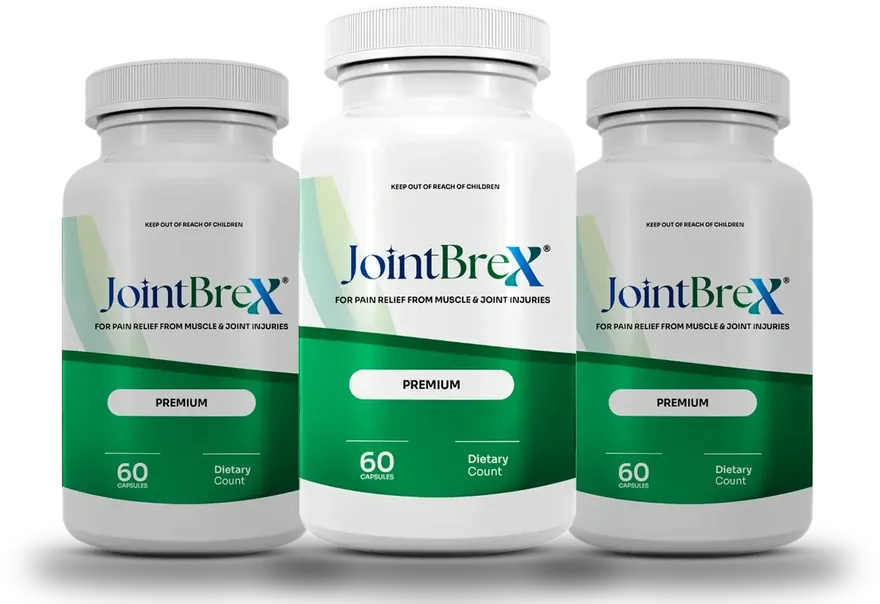
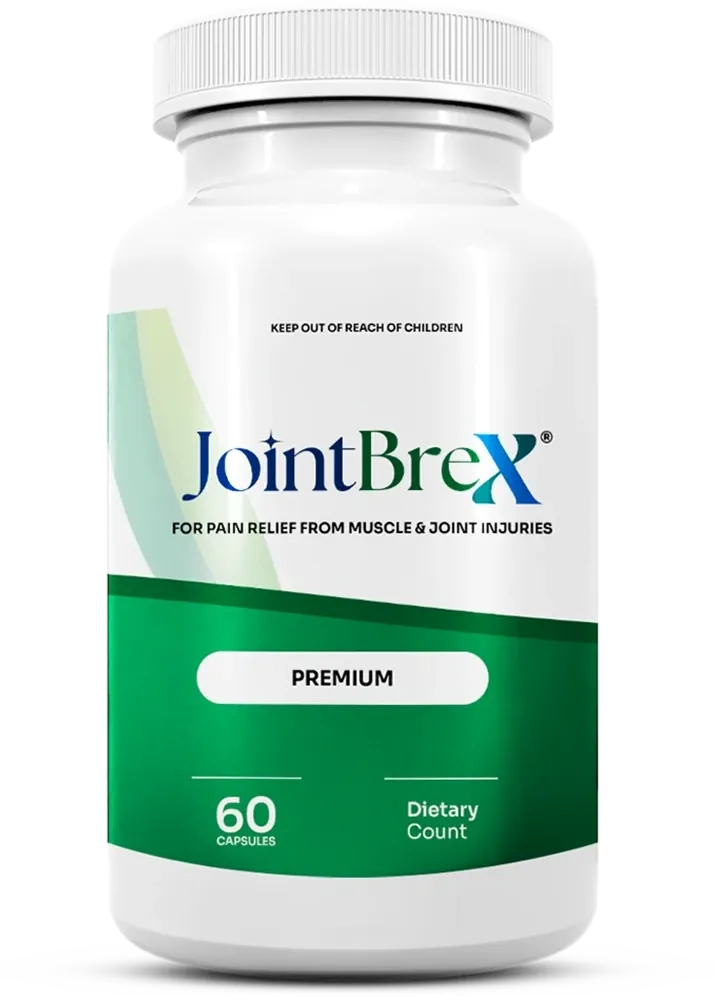
JointBrex Side Effects: What to Know Before You Start
Mild stomach upset is the common side effect across JointBrex's eight ingredients.
Four items need more care: glucosamine with warfarin, a rare turmeric liver signal, bromelain's bleeding and allergy caution, and the shellfish allergen, which rules it out for anyone with that allergy.
Not sure it fits you? See who JointBrex suits.
What is actually documented, ingredient by ingredient
Mild stomach upset is the common thread. Four specific items need more than that one sentence.
Most of what shows up in the research behind these eight ingredients is minor: mild stomach upset, mostly, at doses far higher than what this label prints. That is the honest baseline, and it is worth saying plainly so the four specific items below do not read as scarier than they are. They are also real, documented, and worth reading before you take the first capsule, not after something happens.
This page separates two different kinds of information that supplement marketing often blurs together. Some of what follows is documented at the dose actually printed on this label, which is rare across this formula and worth flagging when it happens. Most of it is documented at a higher research dose, and the honest thing to say about that is that a side effect seen at a much larger amount is not guaranteed at this label's smaller one, in either direction: it could be less likely, or it could simply not have been tested at the amount you are actually taking. Where that distinction matters for a specific ingredient, it is called out below.
| Ingredient | What's documented | Source |
|---|---|---|
| Glucosamine | Shellfish-allergy risk from its source; raised INR in warfarin case reports | Mayo et al., 2026 · Knudsen et al., 2008 |
| Chondroitin | Favorable in trials; no increase in dropouts from side effects vs. placebo | Singh et al., 2015 |
| Boswellia | Generally well tolerated in trials; GI upset the most common complaint | Yu et al., 2020 |
| Turmeric | A documented, uncommon liver-injury signal, mostly in high-bioavailability formulations | National Institute of Diabetes and Digestive and Kidney Diseases (LiverTox), 2020 |
| Quercetin | No safety signal found at the much higher trial dose | Javadi et al., 2016 |
| Methionine | Raised homocysteine at a trial dose far above this label's amount | Ditscheid et al., 2005 |
| MSM | Digestive upset and skin irritation reported, mainly at gram-level doses | National Center for Complementary and Integrative Health (NCCIH), 2026 |
| Bromelain | No major signal in its one dedicated trial; general bleeding and allergy caution applies | Brien et al., 2006 |
This table is a summary. It is not a substitute for reading the four items below in full, especially the first one.
Shellfish allergy: the one absolute stop on this page
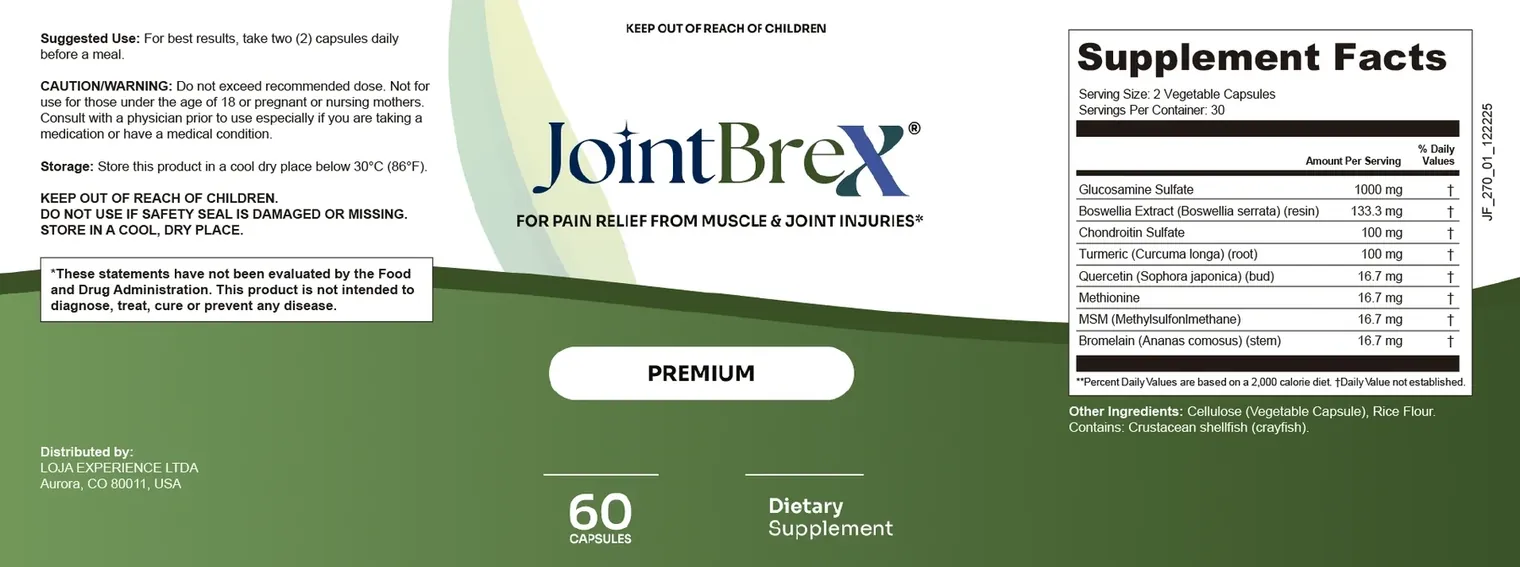
Contains: Crustacean shellfish (crayfish). This is not a theoretical caution. The glucosamine sulfate in this formula is drawn from crustacean shells, and Mayo Clinic states plainly that shellfish-derived glucosamine can trigger an allergic reaction in people with a shellfish allergy. Mayo et al., 2026 Every other item on this page is a "check first" or a "watch for this." This one is a "do not take this product," full stop, regardless of dose, regardless of how the other seven ingredients look on paper.
An allergic reaction can range from mild digestive discomfort to hives, swelling, or a severe reaction requiring emergency care, depending on the person and the exposure. If you have a known shellfish allergy and you have already taken this product, watch for any of those signs and treat them the way you would treat any shellfish exposure, including seeking emergency care for swelling of the face, lips or throat, or difficulty breathing.
This warning applies regardless of how the rest of this label reads. A product can be perfectly dosed on every other ingredient and it would not matter, because an allergy is not a dose-response question the way the rest of this site is built around. There is no amount of crayfish-derived glucosamine that is safe for someone with a genuine shellfish allergy, and no other ingredient on the panel changes that fact.
Glucosamine and warfarin: a documented, specific interaction
Glucosamine has a specific, published interaction with warfarin. A case report describes a 71-year-old man stable on warfarin 7.5 mg a day for five years whose INR rose from 2.3 to 3.9 within three weeks of increasing his glucosamine-chondroitin dose, then to 4.7 after he reduced but did not stop the supplement, only returning to a safe range after he stopped it entirely. Knudsen et al., 2008 Reviewing FDA and WHO adverse-event databases, the same authors found 20 U.S. and 21 international reports of altered coagulation linked to glucosamine, including one severe case involving a brain hemorrhage with permanent disability.
A federal research summary independently confirms the same concern, stating that glucosamine and chondroitin "have been associated with an increased risk of bleeding in people who are taking the anticoagulant warfarin," and separately notes glucosamine may raise blood glucose in some people, which matters for anyone managing diabetes. National Center for Complementary and Integrative Health (NCCIH), 2026
If you take warfarin or another anticoagulant, talk to whoever manages your dose before you start this product. If you are already taking it and you notice unusual bruising, bleeding gums, blood in urine or stool, or you have an INR check scheduled, mention that you started a glucosamine-containing supplement. The interaction can take weeks to show up, which is exactly why it gets missed until someone asks the right question at a checkup.
Turmeric and a documented, uncommon liver signal
Turmeric and curcumin supplements carry a real, if uncommon, liver-injury signal. LiverTox, the NIH's clinical reference on drug-induced liver injury, describes it as an idiosyncratic, likely immune-mediated reaction linked to a specific gene variant, HLA-B*35:01, present in more than 70 percent of reported cases versus 10 to 15 percent of the general population. National Institute of Diabetes and Digestive and Kidney Diseases (LiverTox), 2020 Typical latency is one to four months after starting, with symptoms progressing from fatigue, nausea and poor appetite to dark urine and jaundice. Most people recover within one to three months of stopping, though rare cases of acute liver failure have been reported.
Both LiverTox and a federal turmeric safety review specifically point to high-bioavailability formulations, the kind combined with piperine or a lipid delivery system to boost absorption, as the versions disproportionately linked to reported cases. National Center for Complementary and Integrative Health (NCCIH), 2024 This label's turmeric is plain root powder with no disclosed absorption enhancer, which the ingredients page notes also means very little curcumin is likely reaching your system in the first place. A lower likely dose does not make the risk zero, but it is a different risk profile from the enhanced formulations most case reports describe.
Fatigue, nausea, poor appetite, dark urine, or yellowing of the skin or eyes while taking this product are reasons to stop and get checked, not reasons to wait it out. This is uncommon, but it is not nothing, and liver injury is the kind of thing that is far easier to reverse if it is caught early.
Bromelain's bleeding and allergy caution, and the quieter three
Bromelain is a proteolytic enzyme, meaning its job is to break down proteins, and enzymes with that action are routinely flagged for two specific cautions: a modest bleeding and bruising risk, particularly at higher doses or alongside a blood thinner, and an allergic reaction risk in people sensitive to pineapple or with latex-fruit cross-reactivity, since bromelain is drawn from pineapple stem. The one dedicated knee osteoarthritis trial of bromelain, at 800 mg a day, did not report a bleeding signal or find a benefit over placebo, though it was not designed as a dedicated safety study either. Brien et al., 2006 This label's 16.7 mg is a small fraction of even that dose.
The three remaining low-dose ingredients, quercetin, methionine and MSM, have a quieter safety story mostly because they are quieter ingredients at this amount. MSM is separately noted for digestive upset and skin irritation, but at the multi-gram doses actually studied, far above this label's 16.7 mg. National Center for Complementary and Integrative Health (NCCIH), 2026 No safety signal specific to methionine or quercetin at this label's doses was found in the sources checked for this page.
Who should not take this at all
One allergen and one medication class are firm stops. A short remaining list is a firm stop for other reasons.
- Anyone with a shellfish allergy, at any dose
- Anyone allergic to pineapple, or with a known latex-fruit cross-reactivity
- Anyone on warfarin or another anticoagulant who has not first checked with whoever manages that medication
- Anyone pregnant or nursing
- Anyone under 18
- Anyone with a history of turmeric- or curcumin-related liver injury
Outside that list, the label's own caution statement covers the general case: Do not exceed recommended dose. Not for use for those under the age of 18 or pregnant or nursing mothers. Consult with a physician prior to use especially if you are taking a medication or have a medical condition. That instruction applies to everyone else, not only to the groups named above.
What to do if something starts
Five steps, in order. The first one applies no matter what the symptom is.
Stop taking it
Do not take another capsule while you work out what is happening. This is true for a mild GI complaint and doubly true for anything on this page marked as a stop-and-check sign.Write down what happened and when
Note the day you started, the day the symptom began, and exactly what it was. This detail is what turns a vague worry into something a pharmacist or clinician can actually act on.Call whoever manages your other medications, if you take any
This matters most for warfarin or any other anticoagulant, but it is good practice generally: a clinician cannot account for a supplement they do not know you started.Seek urgent care for anything severe
Swelling of the face, lips or throat, difficulty breathing, unusual bleeding, or jaundice are not wait-and-see symptoms. Treat them as you would any other medical emergency with those signs.Report it if you can
The FDA has a voluntary reporting system for supplement-related adverse events (MedWatch), and reports like the ones behind the warfarin case data above are how these interactions get documented in the first place.
Specific risks, not a general warning
None of this is a reason to assume the worst about every capsule in this bottle. It is a reason to know, specifically, which four things on this label carry documented risk beyond ordinary stomach upset, so you can watch for the right things instead of worrying generally about all of them. Dosing and a missed-day plan are on the how to use page; what each ingredient is actually printed at, against the dose research used, is on the ingredients page.
Side Effects: common questions
What is the most common side effect reported for these ingredients?
Mild digestive upset, reported across several of the eight ingredients in the trials cited on this site, almost always at doses well above what this label prints. It is the least severe and most frequent item on this page by a wide margin.
Can JointBrex cause an allergic reaction?
Yes, specifically from shellfish. Contains: Crustacean shellfish (crayfish). Anyone with a shellfish allergy should not take this product at any dose. A separate, smaller allergy consideration applies to bromelain for anyone allergic to pineapple or with latex-fruit cross-reactivity.
Does JointBrex interact with warfarin?
Glucosamine does. A published case report describes a patient's INR rising from 2.3 to 4.7 after increasing a glucosamine-chondroitin dose. Knudsen et al., 2008 Anyone on warfarin or another anticoagulant should check with whoever manages that medication before starting.
Can the turmeric in JointBrex hurt my liver?
There is a documented, uncommon liver-injury signal linked to turmeric and curcumin supplements. National Institute of Diabetes and Digestive and Kidney Diseases (LiverTox), 2020 It is disproportionately reported with high-bioavailability formulations, which this plain root-powder label is not, but the risk is not zero. Fatigue, nausea, dark urine or yellowing skin while taking it are reasons to stop and get checked.
Does bromelain increase bleeding risk?
Proteolytic enzymes like bromelain are generally flagged for a modest bleeding and bruising caution, particularly at higher doses or alongside a blood thinner. The one dedicated bromelain trial did not report a bleeding signal at 800 mg a day. Brien et al., 2006 This label's 16.7 mg is a small fraction of that dose.
Who should not take JointBrex at all?
Anyone allergic to shellfish or to pineapple, anyone pregnant or nursing, anyone under 18, and anyone on warfarin or another anticoagulant who has not first checked with whoever manages that medication. The shellfish allergy is the one absolute stop on this list.
What should I do if I have a side effect?
Stop taking it, write down what happened and when, and call whoever manages your other medications if you take any. Treat swelling of the face or throat, difficulty breathing, unusual bleeding, or jaundice as urgent, not wait-and-see, symptoms.
Can I take JointBrex with other medications?
The label's own caution statement says to consult a physician before use if you are taking a medication or have a medical condition, and that instruction is worth following literally, not just for warfarin. A clinician or pharmacist can check your specific combination in a way a label never can.
Keep reading
Every ingredient's amount against its research dose
The label figure, the dose used in the cited trial, what that trial found, and the safety note, for all eight.
Read →Dosing, timing and a missed-dose plan
Two capsules a day, what not to stack it with, and the interaction check for anticoagulants.
Read →Who this product is actually built for
Where JointBrex fits, and where a supplement is the wrong tool for the joint pain you actually have.
Read →Order JointBrex from the authorized retailer
60 servings per bottle, 1 to 2 droppers a day. Kits of 2, 3 or 6 bottles run from $49 a bottle on the sales page, with a 60-day money-back guarantee. Questions first? Call +1 (302) 200-3480.