How to Take JointBrex: A Simple Daily Routine
Take two JointBrex capsules together once a day, before a meal.
Pick a meal you eat at the same time each day. If you miss a day, skip it and carry on; never double up. Do not add another glucosamine or chondroitin product, and check with your clinician first if you take warfarin.
Read the JointBrex side effects before you start.
What the label actually tells you to do
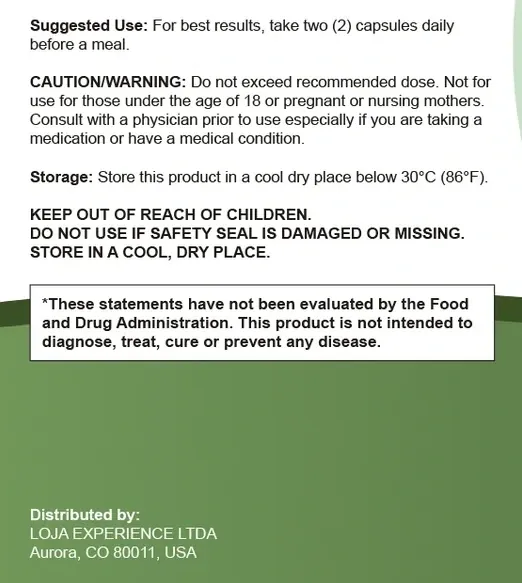
Two capsules a day, before a meal. Everything past that sentence is practical judgment, not a label rule.
The label's instruction is one sentence: For best results, take two (2) capsules daily before a meal. That is the whole dosing plan. No time of day is specified, no note on splitting the two capsules, and nothing about what to do if a day gets missed. This page fills in the practical gaps the label leaves open, using what is actually printed plus ordinary common sense about how to run a fair trial of any supplement.
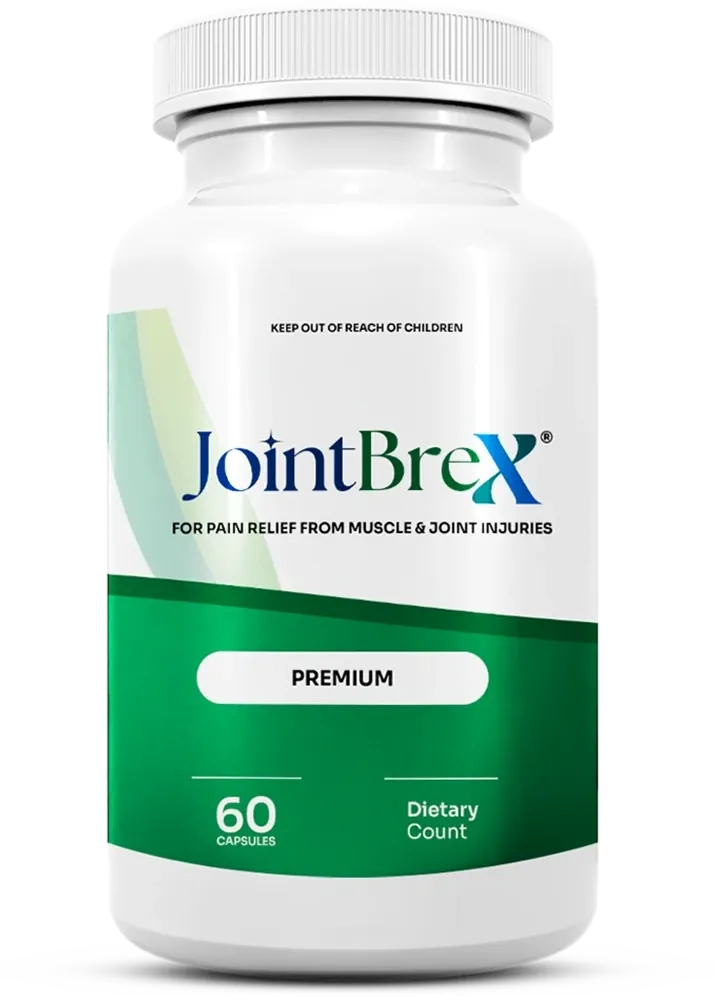
One serving is two capsules, taken together. A bottle holds 60 vegetable capsules, which is 30 servings, so one bottle lasts 30 days at the label dose. That math only holds if both capsules are taken every day; skip days and the bottle simply lasts longer, it does not change the amount in any single serving.
Why 'before a meal,' probably
The label gives the instruction without the reasoning. The likely reasoning is ordinary: fewer stomachs get upset with food in them.
The label does not explain why it says "before a meal," so here is the honest answer: nobody knows for certain without asking the manufacturer, but there is an ordinary reason many capsule supplements carry that instruction. Several ingredients on this panel, bromelain among them, are enzymes or plant compounds that can cause stomach upset on an empty stomach for some people. Taking a capsule with food is a common, low-cost way to reduce that risk, whether or not it changes how well any single ingredient is absorbed.
That is a practical courtesy to your stomach, not a claim that food improves the product's effect. The full ingredient list, with each amount transcribed exactly as printed, is on the Supplement Facts page, if you want to see what you are pairing with a meal.
A simple daily routine, built around the label instruction
The label gives you a dose. It does not give you a habit. This is one way to build one.
- Pick one meal
Attach it to something you already do
The label says before a meal but does not say which one. Choose breakfast, lunch or dinner, whichever you eat at a consistent time most days, and use that meal as the trigger every time. A habit anchored to an existing routine survives longer than one anchored to a specific clock time.
- Take both capsules together
Two capsules is the full serving
The amounts on the Supplement Facts panel are printed per two-capsule serving, not per capsule. Taking one capsule now and one later does not double your servings; it means each half-dose supplies half of every ingredient on the panel until the second capsule is taken.
- Note the day
A one-line log is enough
Write the date and one or two words about how you feel: stiffness on waking, stairs, a walk distance, whatever you personally care about. This is the record that makes a trial period mean something, covered in full below.
- Repeat at the same time tomorrow
Consistency matters more than precision
A capsule taken within an hour of your usual time every day is a more useful trial than one taken at exactly the same minute some days and skipped on others.
If you miss a day, do not make it up with a double dose
Skip and continue at the normal amount. Doubling up is the one response the label's own caution line argues against.
The label does not address a missed dose, so here is the ordinary, conservative answer that applies to most supplements taken once daily: if you miss a day, take the next day's serving as normal and carry on. Do not take a double serving to make up for the one you missed.
Doubling a missed dose does not "catch you up." It briefly doubles every ingredient on the panel at once, including the ones already carrying interaction and safety notes, such as glucosamine's warfarin interaction and turmeric's liver signal, for no established benefit. A missed day is a missed day. Move on to the next one at the normal amount.
If you miss enough days that you lose track of where you are in a bottle, that is a sign the meal-anchoring step above needs a different anchor, not a sign you need to compensate with an extra capsule. A supplement taken inconsistently for four weeks is not really a four-week trial of anything; it is a shorter trial with gaps in it, and gaps make it harder to tell whether a change you notice came from the product or from whatever else changed that week.
What not to do with it
Three habits turn an ordinary supplement trial into a real risk. None of them is exotic or unusual advice.
- Do not double a serving to make up for a missed day
- Do not take this alongside a separate glucosamine or chondroitin product without checking the combined amount
- Do not take this instead of a medicine a doctor has prescribed for joint pain or anything else
- Do not exceed two capsules a day; the label states this directly
- Do not start it without a plan for what you are actually going to measure
Stacking with another glucosamine product
If you already take a separate glucosamine or chondroitin supplement, joint cream, or a multivitamin that lists either ingredient, adding this bottle on top stacks the amounts without you necessarily noticing. Check every label you take against every other one before combining them, not just this one. A cream applied to the skin and a capsule you swallow are still both delivering the same molecule into your system, even if the routes feel unrelated.
Replacing prescribed medicine
This is a food supplement, not a drug, and it is not FDA-approved to treat anything. If a clinician has prescribed medicine for joint pain, an injury, or an inflammatory condition, this product is not a substitute for that plan. Taking it instead of, rather than alongside a conversation with that clinician, delays care for a condition a capsule cannot diagnose, and a joint that is hot, swollen, or newly painful after an injury needs that diagnosis before it needs any supplement.
Keep a simple record, or the trial period tells you nothing
Write down where you started. Thirty days from now, that is the only number worth comparing against.
A trial period only tells you something if you compare it against a baseline you actually wrote down. Most people who try a joint supplement and stop after a month cannot say with any precision whether anything changed, because they never recorded what "before" looked like.
| Day | What to note | Why it's useful |
|---|---|---|
| Day 0, before you start | Stairs, a fixed walk distance, morning stiffness in minutes | Your baseline. Without this, every later day is being compared to memory, not a number. |
| Every few days | The same one or two measures, in the same words | A short, repeatable note beats a long one you will not keep writing. |
| Around day 30 | Compare against day 0, and check the guarantee terms | This is roughly where a fair trial period, and the real refund window on this product, both sit. |
Keep the measures boring and specific: a flight of stairs, a walk to a fixed landmark, minutes of morning stiffness before you feel normal. Vague measures like "feeling better" are the hardest to trust later, because they bend easily toward whatever you already hoped to find.
Thirty days is not an arbitrary number picked for this page. It lines up with the shortest reasonable read of this product's own return policy: the badge advertises sixty days, but published terms also require a minimum of thirty days of consistent use before a refund is even accepted, which leaves a real window of about thirty days once that minimum is subtracted. The guarantee page walks through that arithmetic in full. Whatever you decide about the product, deciding it inside that window is the only way the decision and the policy line up.
If you take a blood thinner, this is a call to make before you start
One specific interaction, with a specific, published case behind it, and a specific action to take about it.
Glucosamine has a documented interaction with warfarin. A published case report describes a patient stable on warfarin for five years whose INR rose from 2.3 to 3.9, then to 4.7, after increasing a glucosamine-chondroitin dose, only returning to a safe range after stopping the supplement entirely. Knudsen et al., 2008 If you take warfarin or any other anticoagulant, talk to whoever manages your dose before you start this product, not after you notice something feels off.
This is a "check first" instruction, not a "never" instruction. Plenty of people manage this conversation successfully with closer monitoring. The point is that the conversation needs to happen before the first capsule, since an INR change can take weeks to show up and longer to trace back to a supplement nobody mentioned at a checkup.
The same logic applies more loosely to anyone on a different regular prescription for an unrelated condition, even without a documented case report like the warfarin one. "I started a joint supplement last month" is a sentence worth saying out loud at your next appointment, or in a phone call before it, simply because a clinician managing your other medications cannot account for something they do not know you are taking.
The short version
Six habits, none of them complicated, and one of them a phone call for a specific group of people.
- Two capsules together, once a day, before a meal you eat at a consistent time
- A missed day is skipped, never doubled up the next day
- Check for glucosamine or chondroitin in anything else you already take before adding this
- This does not replace a prescribed medicine or a clinical diagnosis
- Write down a baseline before day one, or thirty days will tell you very little
- On warfarin or another anticoagulant: check with whoever manages your dose first
How much of each ingredient you are actually taking, and how that compares with the dose used in research, is on the ingredients page. What can go wrong, ingredient by ingredient, is on the side effects page.
How to Use: common questions
What is the dosing instruction for JointBrex?
For best results, take two (2) capsules daily before a meal. That is the entire label instruction. It does not specify a time of day, so published listings suggest picking a consistent time, such as with a particular meal, and sticking to it.
Can I split the two capsules and take one in the morning and one at night?
The label describes a two-capsule serving, and every amount on the Supplement Facts panel is for that full serving, not for a single capsule. Splitting them means each half of the day supplies only half of every ingredient until the second capsule is taken, which is not how the amounts on the panel were meant to be read.
What should I do if I miss a day?
Skip the missed day and take the normal two-capsule serving the next day. Do not take four capsules to make up for the one you missed. Doubling a dose briefly doubles every ingredient on the panel, including the ones with documented interactions, for no established benefit.
Can I take JointBrex with another glucosamine or chondroitin supplement?
Check the combined amount before you do. Taking two products that both contain glucosamine or chondroitin adds their doses together whether or not either label mentions the other. Review every supplement, joint cream, and multivitamin you already take for the same two ingredient names first.
Can JointBrex replace medicine my doctor prescribed?
No. It is a food supplement, not a drug, and it is not FDA-approved to treat any condition. If a clinician has prescribed something for joint pain or an underlying condition, keep taking that and raise any supplement you are considering with them, rather than substituting one for the other.
I take warfarin. Is it safe to take JointBrex?
Talk to whoever manages your warfarin dose before you start. A published case report describes a patient's INR rising from 2.3 to 4.7 after increasing a glucosamine-chondroitin dose. Knudsen et al., 2008 This is a check-first situation, not an automatic no, but the check needs to happen before the first capsule.
How long should I try it before deciding whether it's doing anything?
Write down a specific baseline, such as stairs, a fixed walk, or minutes of morning stiffness, on day zero. Compare that same measure again around day 30, which is also roughly where this product's real refund window closes, so the trial and the decision point land close together.
Does it matter which meal I take JointBrex with?
The label says before a meal and does not specify which one. What matters more than the specific meal is picking one and taking it at a consistent point in your day, so the two capsules become part of an existing routine rather than something you have to remember separately.
Keep reading
Every ingredient's amount against its research dose
The label figure, the dose used in the cited trial, what that trial found, and the safety note, for all eight.
Read →What's documented for each ingredient
GI upset, the warfarin interaction, turmeric's liver signal, and who should not take this at all.
Read →The refund window, in plain arithmetic
A 60-day guarantee with a 30-day minimum-use condition attached is a shorter window than the badge suggests.
Read →Order JointBrex from the authorized retailer
60 servings per bottle, 1 to 2 droppers a day. Kits of 2, 3 or 6 bottles run from $49 a bottle on the sales page, with a 60-day money-back guarantee. Questions first? Call +1 (302) 200-3480.