JointBrex Benefits: The Research Behind Each Ingredient
Several JointBrex ingredients have real trial research behind them.
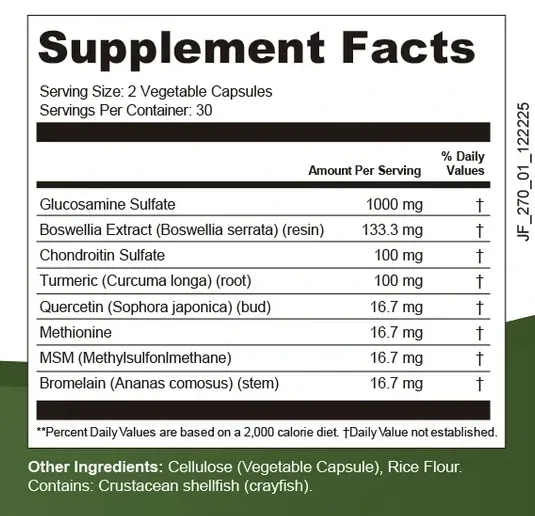
Boswellia, at 133.3 mg, lands in its studied dose range. This page looks at each ingredient's research and the label dose side by side.
See the full list on the JointBrex ingredients page.
What research studied, and what this bottle actually supplies
Two different questions: is there research on the ingredient, and does this dose match it. This page answers both, separately, every time.
Two different questions get asked about a joint supplement, and they have two different answers. The first is "is there research behind this ingredient?" Usually yes, at least for some of the eight on this panel. The second is "does this bottle, at this dose, do what the sales page says?" That is a separate question, and for most of the eight ingredients here, the honest answer is no evidence either way, because nobody has tested this amount.
This page keeps those two questions apart on purpose. For each ingredient, it states what human research has actually looked at — the studied benefit, at the dose that was studied — and attaches the gap between that dose and what this label supplies every single time. Then it draws the line between that and the sentences on the sales page, which describe outcomes no trial of this formula has measured.
What each ingredient is studied for, and the caveat attached to it
Every claim below comes with the dose it was actually tested at, and how this label's amount compares.
A benefit claim is only as good as the dose behind it. Below is every ingredient on this label, what it has been studied for in human trials, and the dose caveat that applies to that ingredient specifically. Read the caveat column as much as the claim column: on seven of the eight rows, it is the more important one.
| Ingredient | Studied for | The dose caveat |
|---|---|---|
| Glucosamine Sulfate | Cartilage support and pain in knee osteoarthritis, as a proposed raw material for cartilage tissue | This label supplies 1,000 mg. The largest trial, at 1,500 mg a day, found no significant benefit over placebo for the group overall. Clegg et al., 2006 |
| Chondroitin Sulfate | Pain and function scores in knee osteoarthritis, in a large pooled analysis of 43 trials | This label supplies 100 mg, about one twelfth of the 800 to 1,200 mg a day range behind that finding. Singh et al., 2015 |
| Boswellia Extract | Pain, stiffness and function in osteoarthritis — the most consistent human evidence of the eight | 133.3 mg sits inside the 100 to 250 mg a day range studied, but every positive trial used an extract standardized to a stated boswellic-acid content, and this label gives no standardization figure. Yu et al., 2020 |
| Turmeric Root | Pain reduction in osteoarthritis — as curcumin, a specific compound, not turmeric root as a whole | 100 mg of root works out to an estimated 0.6 to 3 mg of curcumin, against the 500 to 1,000 mg a day of curcumin itself that trials use. Tayyem et al., 2006 Wu et al., 2019 |
| Quercetin | Reduced morning stiffness and lower inflammatory markers, in one rheumatoid arthritis trial | 16.7 mg here is roughly a thirtieth of the 500 mg a day used in that trial. Javadi et al., 2016 |
| Methionine | Not joint pain directly. The one human dose trial located measured homocysteine, and joint research studies SAMe, a different compound the body makes from methionine | 16.7 mg is about 1% of the 1,500 mg a day studied, and no joint benefit is attributed to plain methionine at any dose. Ditscheid et al., 2005 National Center for Complementary and Integrative Health (NCCIH), 2026 |
| MSM | Small improvements in knee osteoarthritis physical function, which the trial's own authors called of uncertain clinical significance | 16.7 mg is about half a percent of the 3,375 mg a day studied. Debbi et al., 2011 |
| Bromelain | Nothing, at the one dose actually tested for knee osteoarthritis — that trial found no benefit over placebo | 16.7 mg here is about 2% of a dose, 800 mg a day, that already failed to separate from placebo. Brien et al., 2006 |
Reading the eight caveats as a set, not one at a time
Six rows are a dose gap. One row is a missing number. One row is a dose that already failed.
Look at the caveat column as a set rather than one row at a time, and a pattern shows up that no single row makes obvious on its own. Six of the eight caveats describe a gap measured in multiples: a thirtieth, a twelfth, a hundredth. Only two rows read differently. Boswellia's caveat is about a missing number on the label, not a missing zero on the dose. Bromelain's caveat is not really a dose gap at all — the dose that was tested already failed, so a smaller dose of the same thing has no research reason to succeed where the larger one did not.
That distinction matters for how you read the rest of this page. "Below the studied dose" and "the studied dose itself did not work" are not the same finding, and treating them as interchangeable would flatter this formula in one case and understate a real negative result in the other. We have kept them separate on purpose.
What cannot honestly be said about this product
Not because the ingredients are worthless, but because a treatment claim is a different kind of claim than a dose one.
None of the eight rows above says "relieves pain," "treats arthritis," or "heals an injury," because no dose of any of these eight ingredients has been shown, in a controlled trial, to do those specific things — and because a dietary supplement is legally barred from claiming them regardless of what the research eventually shows. This is a separate rule from the dose arithmetic above, and it applies whether or not an ingredient hits its studied amount.
- No pain-relief claim. "Relieves" or "provides relief from" pain describes treating a symptom, which is a drug claim, not a description of what a food ingredient does inside a normally functioning body.
- No arthritis claim. Naming a specific disease and promising to reduce its symptoms is the FDA's own published example of a claim a supplement label may not make.
- No injury claim. An injury is a diagnosis. A capsule cannot know whether a sore knee is a strain, a meniscus tear, or early osteoarthritis, and it is not permitted to claim it treats any of them.
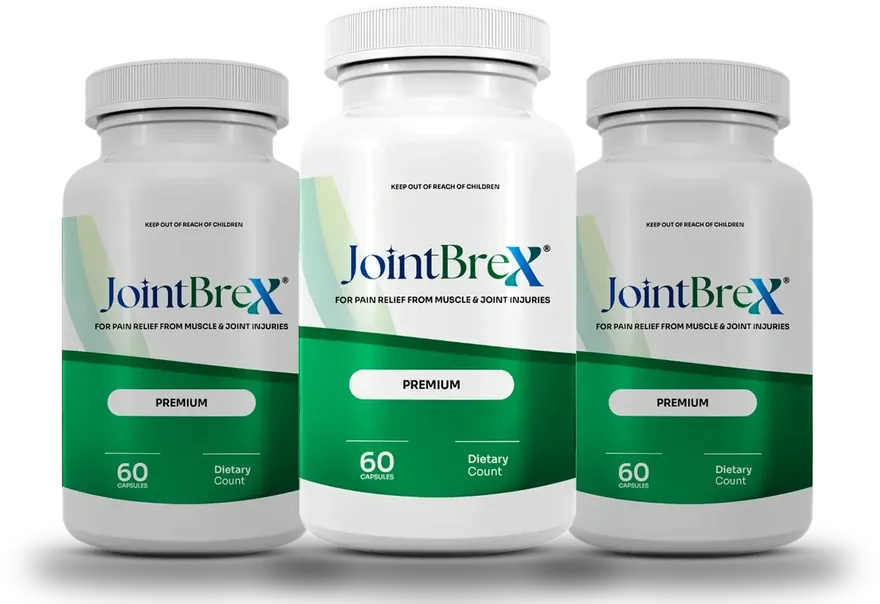
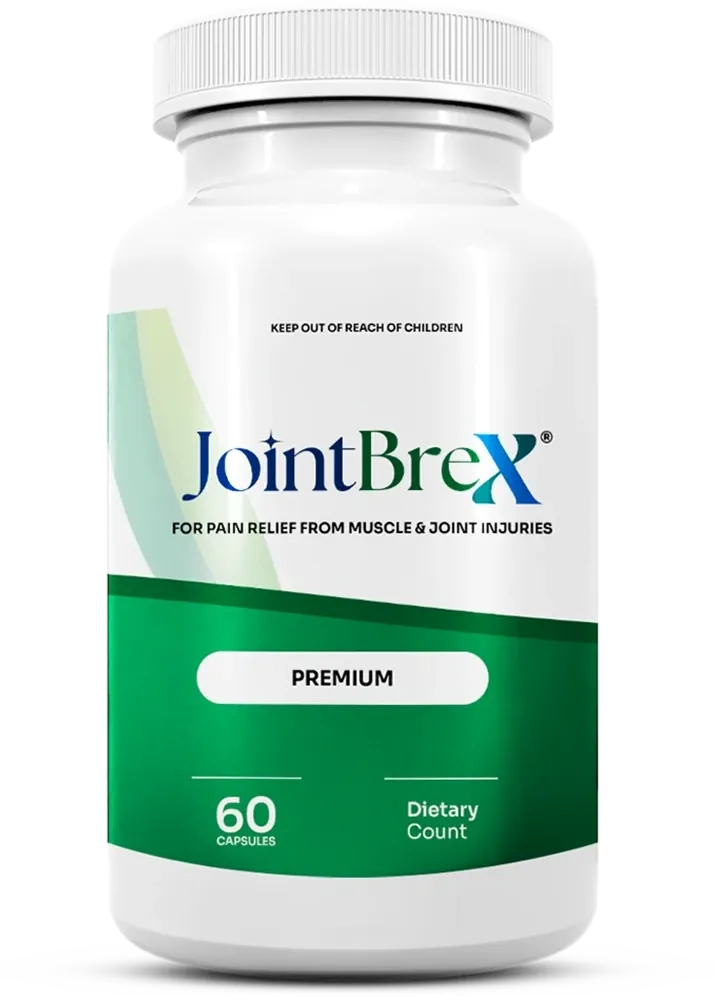
This bottle's own front panel reads 'FOR PAIN RELIEF FROM MUSCLE & JOINT INJURIES*'. That is a treatment claim about a named condition, and the FDA's 2000 final rule on structure/function claims gives “reduces the pain and stiffness associated with arthritis” as its own worked example of exactly that kind of claim — one a supplement label is not allowed to make. We print the front-panel wording because it is a fact about the product, and we correct it in the same sentence rather than repeat it as if it were true. U.S. et al., 2000
The FTC has already settled a case over almost exactly this pattern: a joint supplement marketed as able to "treat arthritis and alleviate joint pain," with roughly $775,000 returned to buyers. Federal et al., 2020 Its own 2022 compliance guidance says plainly that a disclaimer does not cure an unsubstantiated disease claim, "even if the claim is carefully qualified" by an asterisk. Federal et al., 2022 The asterisk on this bottle's front panel does not change what the sentence above it says.
The sales page's language, checked against the research and the panel
Three sentences from the sales page. Neither the middle nor the right-hand column matches the left one.
| What the sales page claims | What the research supports | What this label supplies |
|---|---|---|
| Provide deep nourishment and intense support directly to joint tissues, where mobility and flexibility are regulated | Glucosamine and chondroitin are proposed, not proven, as raw material for cartilage. The largest trial of both together, at higher doses than this label uses, found no significant benefit over placebo for the group as a whole. Clegg et al., 2006 | 1,000 mg glucosamine and 100 mg chondroitin. The chondroitin figure is one twelfth of the trial dose behind that theory. |
| Restore natural mobility and joint flexibility, eliminating the sensation of stiffness so you can move with confidence again | Of the eight ingredients, only boswellia has trial evidence of reduced stiffness, and only at a standardized-extract dose this label does not confirm it matches. Yu et al., 2020 | 133.3 mg of boswellia extract with no standardization figure given. The other seven ingredients arrive below their studied doses. |
| The result is less pain, less stiffness, and more freedom to move | No controlled trial has tested these eight ingredients together at these amounts. The single largest trial of the two headline ingredients, run at higher doses than this bottle uses, did not separate from placebo. Clegg et al., 2006 | Eight ingredients, where seven arrive under their studied dose, several by more than tenfold. |
What a fair reading actually supports, at best
Not zero, and not what the sales page promises. Somewhere modest in between, and unproven either way.
None of this means the capsule is inert. A fraction of a studied dose is not automatically nothing, and boswellia in particular has a real, if modest, evidence base behind an amount close to what this label supplies. What a fair reading supports is a modest, uncertain, hard-to-distinguish-from-placebo possibility at best — not the confident language on the sales page, and not a guarantee in either direction.
The realistic best case
Some reduction in everyday stiffness, plausibly attributable to the boswellia content, that you cannot cleanly separate from the placebo effect or from whatever else changed in your routine during the same weeks.
The realistic likely case
No noticeable change, because seven of the eight ingredients arrive below the amount any cited trial tested, and the largest trial of the two best-known ingredients did not beat placebo even at a higher dose.
What it will not do
Diagnose a sore joint, treat an injury, or replace a clinician's assessment of new, severe or unusual pain, no matter which of the two cases above turns out to be true for you.
For a sense of how long a fair trial of any of this actually takes, and why that collides with the refund window, see results timeline. For the full dose-by-dose arithmetic behind every row above, see label dose versus trial dose.
What guideline bodies recommend before any supplement
Exercise and weight management come first in the guideline. A capsule is not listed as an alternative to either.
None of the above happens in a vacuum. The 2019 American College of Rheumatology and Arthritis Foundation osteoarthritis guideline strongly recommends exercise, weight management where relevant, and structured self-management as the core of evidence-based care, and it conditionally recommends against glucosamine and chondroitin specifically. American et al., 2020 A companion physician summary adds that a 5% reduction in body weight produces a meaningful pain improvement in knee and hip osteoarthritis on its own. Buelt et al., 2021 Whatever this bottle is studied for, it is not what guideline bodies put first.
A capsule is not a substitute for the exercise and weight-management side of osteoarthritis care, and it is not a fit for everyone who reaches for it. The who it's for page sets out both sides of that plainly.
Benefits: common questions
Does JointBrex relieve joint pain?
No trial of this formula, at this dose, has tested that question, so nobody can honestly say yes. The front-panel claim that it does is worded as a treatment claim, which a dietary supplement label is not permitted to make. U.S. et al., 2000
Which ingredient in JointBrex has the strongest evidence?
Boswellia extract. Its 133.3 mg dose sits inside the 100 to 250 mg a day range used in trials that found real pain and stiffness improvement. Yu et al., 2020 The catch is that those trials used extract standardized to a specific boswellic-acid content, and this label gives no such figure.
Can JointBrex treat arthritis?
No. No supplement is FDA-approved to treat arthritis, and no research on any ingredient on this label supports that specific claim at the dose printed here.
What is the difference between 'supports healthy joints' and 'relieves pain from an injury'?
The first describes a structure or function inside a normally working body, which a supplement label may say. The second names a condition and promises to treat it, which crosses into the kind of claim the FDA's own rule reserves for drugs. U.S. et al., 2000
Why does the sales page describe benefits the label can't back up?
Marketing copy and the regulated Supplement Facts panel are written by different parts of a company, to different standards. When they disagree, the panel is the document to trust, because it is the one the company has to stand behind.
What can I honestly expect if I try it?
At best, a modest, hard-to-separate-from-placebo change, plausibly tied to the boswellia content. At the label's doses for the other seven ingredients, there is no trial evidence to expect a noticeable change either way.
Has the FDA evaluated any benefit claim for JointBrex?
No. The FDA does not approve dietary supplements or evaluate the claims made for them before they reach shelves. Any seal referring to FDA registration describes a facility listing, not a product approval.
What does the osteoarthritis guideline recommend instead of a supplement?
Exercise, weight management where relevant, and structured self-management programs, all ahead of glucosamine or chondroitin specifically. American et al., 2020
Keep reading
The full dose-by-dose arithmetic
Every ingredient's amount here, charted against the dose the cited research actually used.
Read →Who this is, and is not, a reasonable fit for
Age, allergy, anticoagulant use and the red-flag signs that belong with a doctor, not a bottle.
Read →How long a fair trial actually takes
Why nobody can give you a timeline at these doses, and why that collides with the refund window.
Read →Order JointBrex from the authorized retailer
60 servings per bottle, 1 to 2 droppers a day. Kits of 2, 3 or 6 bottles run from $49 a bottle on the sales page, with a 60-day money-back guarantee. Questions first? Call +1 (302) 200-3480.