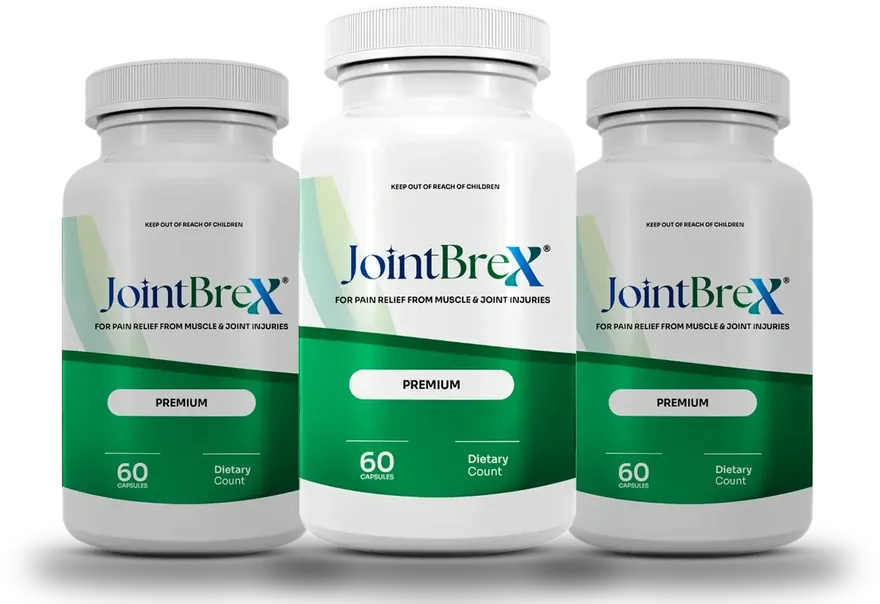
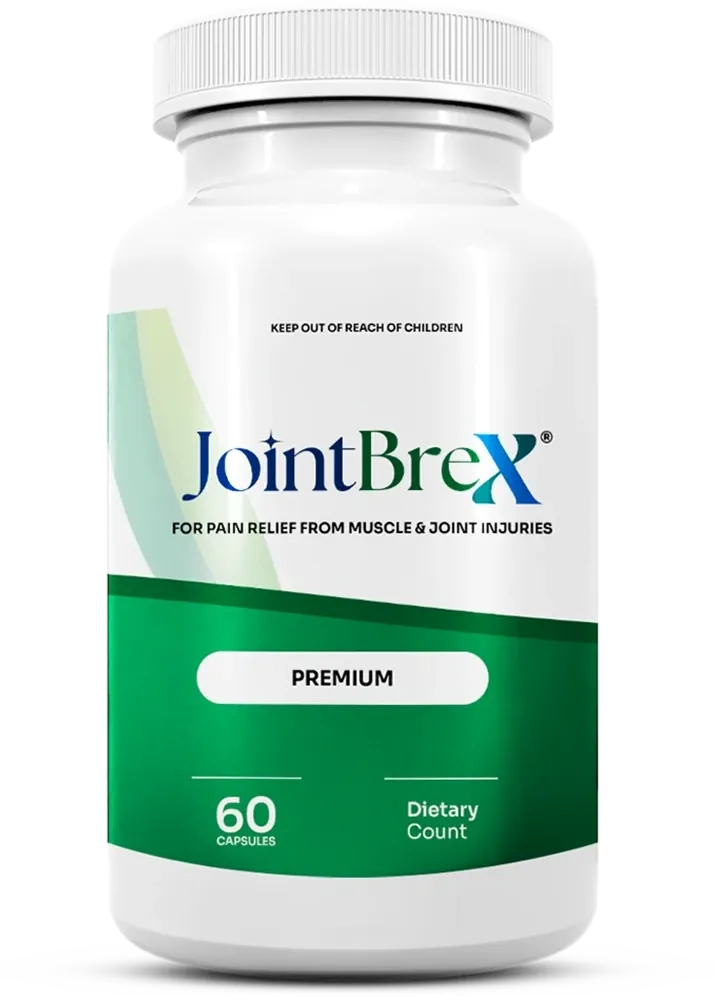
How Does JointBrex Work? The Three Proposed Routes
JointBrex is proposed to work through three routes.
Glucosamine and chondroitin act as cartilage building blocks, boswellia and turmeric target inflammatory enzymes, and the rest add antioxidant or enzyme activity. These are proposed routes, not proven outcomes.
The benefits page covers the research on each ingredient.
A biological story is not the same thing as a result
What follows is proposed biology, not a list of proven effects.
Every ingredient on this label has a biological story behind it: a reason a chemist or a researcher thought it might help a joint. Those stories are worth explaining, because they are what a bottle is actually selling before any human trial gets involved. They are also, on their own, worth exactly nothing as proof. A mechanism is a hypothesis about how a molecule might act inside the body. It is not a measurement of what happened when people took it.
Every verb on this page is doing careful work. "Is proposed to," "is thought to," "the theory holds," none of those mean "does." Where a cited trial actually measured an outcome in people, this page says so and points to the ingredients page for the number. Where it did not, this page says that too.
This distinction matters for a reason beyond careful writing. A supplement label is allowed to describe a structure or function, something an ingredient is understood to do inside a normally functioning body, without ever claiming it treats, cures, or prevents a disease. "Supports healthy joints" fits that structure/function rule. "Relieves the pain of an injury," which is what this bottle prints on its front panel, does not, and it does not become a mechanism claim just because a biological story exists somewhere behind it. This page stays on the structure/function side of that line deliberately: it describes what each ingredient is proposed to do inside a cell, never what it does for a person's pain.
Glucosamine and chondroitin: proposed as raw material for cartilage
The theory is supply and demand at the cellular level. That theory is not the same as a measured result.
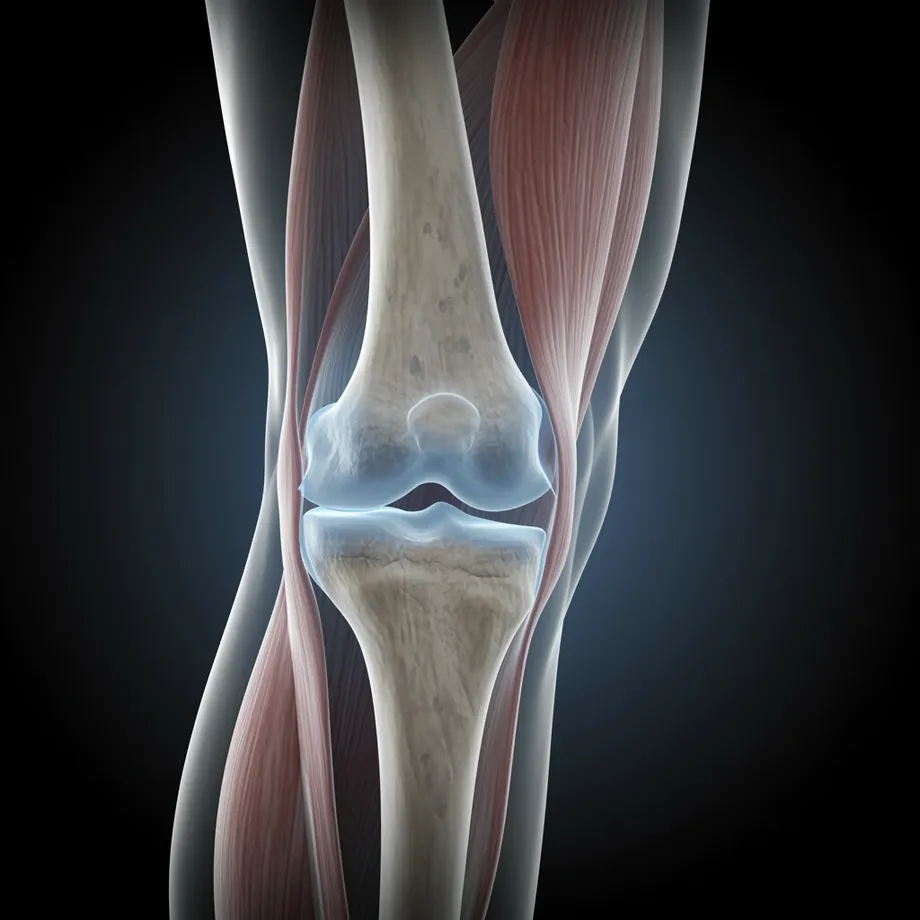
Glucosamine and chondroitin are grouped together here because they share the same proposed job: acting as raw material for cartilage. Cartilage is built from proteoglycans, and proteoglycans are built partly from glycosaminoglycan chains, long sugar molecules that glucosamine is a building block for. Chondroitin sulfate is itself one of those glycosaminoglycans, already present in cartilage tissue rather than something the body assembles from scratch out of it.
The theory that follows from that biology is straightforward: if cartilage breakdown in an aging or stressed joint outpaces the body's ability to rebuild it, supplying extra glucosamine and chondroitin by mouth might tip that balance back toward repair. It is a coherent story about supply and demand at the cellular level. What it is not is a guarantee that swallowed glucosamine reaches a joint in a form the cartilage can actually use, in an amount that matters, which is a separate pharmacological question the mechanism story does not answer by itself.
Boswellia and turmeric: proposed to interrupt inflammatory signaling
Both are proposed to work upstream of pain itself, by blocking specific enzymes in the inflammatory cascade.
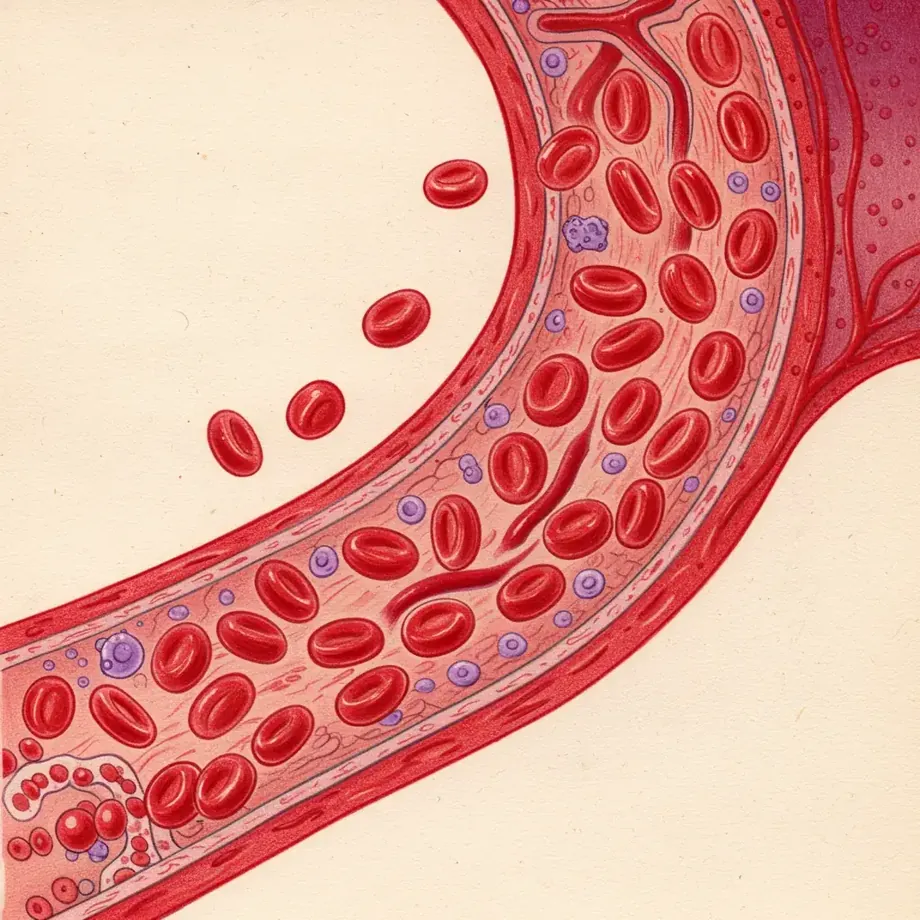
Boswellia and turmeric are usually grouped under a different proposed mechanism: interrupting the chemical signals that drive inflammation, rather than supplying raw material. Boswellic acids, the active compounds in boswellia resin, are proposed to inhibit an enzyme called 5-lipoxygenase, which the body uses to build leukotrienes, one of the signaling molecules involved in inflammation. The meta-analysis behind this label's boswellia amount specifically credits AKBA, one boswellic acid, with what it calls strong pharmacological activity against that pathway. Yu et al., 2020
Curcumin, the compound turmeric root is named for, is proposed to work further upstream, damping down NF-kB, a signaling protein that switches on a wider set of inflammatory genes, and inhibiting COX-2, the same general enzyme family that ibuprofen and other NSAIDs target directly. A curcumin meta-analysis found effect sizes and side-effect rates comparable to ibuprofen at curcumin doses of 500 to 1,000 mg a day, which is the kind of result a COX-pathway story would predict, at that dose. {cite("wu_2019_curcumin_osteoarthritis_meta")} What it does not establish is that this label's 100 mg of turmeric root, which works out to roughly a milligram or two of actual curcumin, engages that same pathway to any meaningful degree.
Bromelain, MSM, quercetin and methionine: enzymatic and antioxidant routes
Four different proposed jobs, and only one of the four has a trial showing its specific pathway measurably moving.
The remaining four ingredients on this label, bromelain, MSM, quercetin and methionine, are proposed to act through enzymatic or antioxidant routes rather than the cartilage-supply or signal-blocking stories above.
Bromelain
A proteolytic enzyme from pineapple stem. The traditional proposed mechanism is that it breaks down fibrin and interferes with bradykinin, a peptide involved in swelling and pain signaling, reducing local inflammation as a side effect of digesting inflammatory proteins. The one dedicated knee trial of it did not find that mechanism translate into a measurable benefit at 800 mg a day. Brien et al., 2006
MSM
An organosulfur compound proposed to act as a sulfur donor for connective tissue and as a mild antioxidant, scavenging reactive molecules that would otherwise damage tissue. The one controlled knee trial of it found small improvements the authors themselves called of uncertain clinical significance, at a dose nearly two hundred times this label's amount. Debbi et al., 2011
Quercetin
A plant flavonoid proposed to work as an antioxidant and to blunt specific inflammatory messengers. A rheumatoid arthritis trial at 500 mg a day found a measurable drop in plasma TNF-alpha, one such messenger, alongside less stiffness, which is consistent with that proposed pathway actually engaging at that dose. Javadi et al., 2016 This label supplies about a thirtieth of it.
Methionine
A sulfur-containing amino acid. Its clearest metabolic role is as the body's precursor to SAMe and, further downstream, to glutathione, an antioxidant. The joint-specific mechanism story mostly belongs to SAMe, not methionine itself, and the research summary that covers SAMe does not evaluate methionine directly. National Center for Complementary and Integrative Health (NCCIH), 2026 No proposed mechanism here has been tested at anything close to this label's 16.7 mg.
Getting there is a separate problem from the mechanism itself
A proposed pathway inside a joint cell is only useful if the ingredient actually reaches that cell intact.
Every mechanism above assumes the ingredient actually gets to where it is proposed to act, in a form the body can use. That assumption is where a lot of these stories run into trouble before a single trial even starts.
Large molecules face a bigger hurdle
Chondroitin sulfate is a long-chain molecule, and glucosamine is processed through the liver before any of it reaches a joint. Neither is guaranteed to arrive at cartilage tissue intact, in a form that can be built into new structural material, simply because it was swallowed. The cartilage-substrate mechanism assumes that journey happens efficiently; it does not by itself prove that it does.
Curcumin is a documented case of poor absorption
Plain oral curcumin is very poorly absorbed on its own. A human trial found 2,000 mg of curcumin alone produced barely detectable blood levels, while adding just 20 mg of piperine raised absorption roughly 2,000 percent. Shoba et al., 1998 This label discloses no piperine or other absorption enhancer alongside its turmeric root, so whatever curcumin is in that root has to clear the same hurdle unassisted.
None of this means oral supplementation never works for any ingredient. It means the mechanism story and the delivery story are two different questions, and a label that gets the biology right can still fail on the second one. This is a separate issue from dose, covered in full on the ingredients page; a molecule can be underdosed, poorly absorbed, or both at once, and a trial that used a higher dose than this label prints was also, in most cases, working with a plain, unenhanced form of the same molecule, not a special delivery system this bottle discloses either.
A plausible pathway is not a proven result
The largest trial ever run on this label's best-known mechanism did not find the benefit that mechanism predicts.
Every story above is a real, published hypothesis, and none of them is proof that swallowing this capsule changes how a joint feels. The clearest demonstration of that gap is the biggest trial ever run on this label's two headline ingredients. GAIT gave 1,583 people glucosamine, chondroitin, both, or placebo for 24 weeks, and found no statistically significant benefit over placebo for the group as a whole, despite a cartilage-substrate mechanism that reads as entirely plausible on paper. Clegg et al., 2006 A two-year follow-up found no treatment group slowed cartilage loss on X-ray either. Sawitzke et al., 2008
A separate Cochrane review did find a modest pain benefit from chondroitin, so this is not a case where the mechanism failed everywhere. Singh et al., 2015 It is a case where a coherent biological story, a large well-run trial, and a real-world capsule dose can all point in different directions at once, and the only way to know which one applies to you is to look at outcomes, not biology. The 2019 ACR and Arthritis Foundation osteoarthritis guideline reached its own conclusion after weighing that same evidence: it conditionally recommends against glucosamine and chondroitin for knee or hip osteoarthritis. American et al., 2020
None of this means every ingredient here is inert, and it does not mean the mechanisms described above are wrong as biology. It means a plausible pathway is the beginning of a case for an ingredient, not the end of one, and the dose printed on this label is a separate question from the dose that pathway was actually tested at. The ingredients page lines those two numbers up for all eight.
Eight proposed mechanisms, one outcome trial that did not confirm the biggest of them
Plausible biology for every ingredient here. Confirmed clinical benefit for far fewer of them.
- Glucosamine and chondroitin: proposed as raw material for cartilage's own structural molecules
- Boswellia and turmeric: proposed to block specific enzymes in the inflammatory signaling cascade
- Bromelain: proposed to break down inflammatory proteins as a side effect of normal digestion
- MSM, quercetin and methionine: proposed antioxidant or sulfur-donor roles, mostly untested at this label's doses
- The largest outcome trial of the two headline ingredients did not confirm a benefit despite the mechanism
What each ingredient is thought to do inside a cell is one question. What is actually printed on this bottle, and what happens if you take it, are two more. The Supplement Facts page covers the first, and the side effects page covers what to watch for.
How It Works: common questions
Is there proof these mechanisms actually reduce joint pain in people?
Not consistently, no. Each mechanism is a real, published hypothesis about how a molecule might act, but the largest human trial of the best-known one, glucosamine and chondroitin as cartilage substrate, did not find a significant benefit over placebo. Clegg et al., 2006 A plausible mechanism is a starting point for research, not a substitute for it.
What is the proposed mechanism for glucosamine and chondroitin?
Both are proposed to act as raw material for cartilage. Glucosamine is a building block of the glycosaminoglycan chains that make up cartilage's structural matrix, and chondroitin sulfate is itself one of those glycosaminoglycans. The theory is that supplying more of both by mouth could help cartilage keep pace with everyday wear.
How is boswellia thought to reduce inflammation?
Boswellic acids, its active compounds, are proposed to inhibit 5-lipoxygenase, an enzyme the body uses to build leukotrienes, a class of inflammatory signaling molecules. Yu et al., 2020 That is a different pathway from the one NSAIDs typically target.
Does curcumin work the same way as ibuprofen?
Not identically, but along an overlapping pathway. Curcumin is proposed to inhibit COX-2, part of the same enzyme family NSAIDs like ibuprofen block directly, plus NF-kB, a broader inflammatory signaling protein. A meta-analysis found curcumin's effects comparable to ibuprofen at 500 to 1,000 mg a day of curcumin, far above what this label's turmeric root supplies. Wu et al., 2019
What is bromelain supposed to do, mechanistically?
As a proteolytic enzyme, it is proposed to break down fibrin and interfere with bradykinin, a peptide involved in swelling and pain. The one dedicated knee osteoarthritis trial of bromelain did not find that mechanism produce a measurable benefit over placebo. Brien et al., 2006
Is MSM an antioxidant?
It is proposed to act as a mild antioxidant and a sulfur donor for connective tissue, yes. The one controlled knee trial of it found only small, uncertain-significance improvements, and at a dose roughly two hundred times higher than this label's amount. Debbi et al., 2011
Why doesn't a plausible mechanism guarantee a benefit?
Because a mechanism describes what a molecule could do in a cell or a dish, not what measurably happens in a person who swallows a capsule at a specific dose. Absorption, metabolism, the amount that actually reaches the joint, and dozens of other variables sit between the biology and the outcome, which is exactly why controlled human trials, not mechanism papers, are what settle the question.
Does the front-panel claim on this bottle describe a mechanism?
No. The front panel claims pain relief from muscle and joint injuries, which is an outcome claim about a specific condition, not a structure/function description of a mechanism. A mechanism page like this one stays on the safer side of that line: what an ingredient is proposed to do inside a cell, never what it does for a person's pain from an injury.
Keep reading
Every ingredient's amount against its research dose
The label figure, the dose used in the cited trial, what that trial found, and the safety note, for all eight.
Read →What's documented for each ingredient
GI upset, the warfarin interaction, turmeric's liver signal, and the shellfish allergy that rules some people out.
Read →The full dose-gap arithmetic
A ladder chart of every amount on this label against the dose the cited research actually used.
Read →Order JointBrex from the authorized retailer
60 servings per bottle, 1 to 2 droppers a day. Kits of 2, 3 or 6 bottles run from $49 a bottle on the sales page, with a 60-day money-back guarantee. Questions first? Call +1 (302) 200-3480.