A 60-Day Guarantee With a 30-Day Window
A 60-day guarantee that also requires 30 days of use before a refund is accepted leaves a real window of about 30 days, not 60. On a six-bottle kit, that window closes while several bottles are typically still sealed. Diarise the purchase date and both deadlines, and read any guarantee's starting point and conditions before you rely on the headline number.

A 60-day guarantee that is not actually 60 days
A "60-day money-back guarantee" sounds like a two-month decision window. On this product, it is not, and the reason is a second condition that never makes it onto the badge. Once you know where to look, this takes about a minute to work out for yourself, and it is worth doing before you decide how many bottles to order, not after.
This is not an accusation that the guarantee is fake, and it is not a claim that the seller will refuse a legitimate request. It is a plain reading of two numbers that are both true and both published, sitting right next to each other in the terms, that most people never put side by side before they buy.
Two numbers, one badge
Sixty days from the purchase date, but published listings also require a minimum of 30 days of consistent use before a refund request is accepted. That leaves a real window of about 30 days.
| What's published | What it means |
|---|---|
| 60 days | How long the guarantee runs, counted from the date you purchased, not from delivery |
| 30 days of consistent use | A minimum-use condition that must pass before a refund request is even accepted |
Read alone, the 60-day figure is what most people remember, because it is the number printed largest and closest to the word "guarantee." The 30-day condition is the one that actually determines how much time you have to decide, and it is stated separately, not subtracted for you.
Why a minimum-use condition exists at all
A minimum-use condition is not unique to this product. It is a common structure across supplement guarantees generally, and it is worth understanding why it exists before deciding whether it is reasonable here.
The idea is to separate an instant, first-impression refund request, made before the product has had any real chance to do anything, from a considered decision made after actually using it for a while. A capsule taken once and judged the next morning has not been given a fair test by most reasonable standards, and a minimum-use window is one way a seller tries to enforce that.
Whether 30 days specifically is the right length for that purpose is a judgment call, and it is not one we are taking a position on here. What matters for your planning is simpler: the condition exists, it eats directly into the 60-day figure on the badge, and it is stated in the seller's published terms separately from the headline number rather than subtracted from it for you. Knowing that it exists is the whole trick to not being surprised by it later.
It also explains why the two numbers get printed separately rather than pre-subtracted into one figure. "Guaranteed for 30 days" is a smaller, less appealing badge than "guaranteed for 60 days," even when the two describe roughly the same amount of usable time once a minimum-use condition is factored in. Nobody has done anything dishonest by printing the larger number; they have simply printed the number that reads best, and left the arithmetic to you.
Where the real window actually sits
Subtract the required-use period from the total window and the real number appears on its own.
| Day | What's true on that day |
|---|---|
| Day 0 | Purchase date. The 60-day clock starts here. |
| Day 1-30 | Required use period. A refund request made in this window is not accepted under the published terms, no matter how dissatisfied you are. |
| Day 31 | The earliest a request is eligible, having cleared the 30-day minimum. |
| Day 31-60 | The actual usable window: about 30 days to decide and act. |
| Day 61 onward | Outside the 60-day guarantee entirely. |
Sixty minus thirty is thirty. That is the whole calculation, and it is worth doing out loud once so it is not a surprise later: the badge advertises a two-month decision, and the published terms actually give you closer to one.
Two examples that make the window concrete
Two short examples make the arithmetic concrete rather than abstract.
| Scenario | Purchase date | Refund request made | Accepted under published terms? |
|---|---|---|---|
| Early request | January 1 | January 15 (day 14) | No. Still inside the 30-day required-use period. |
| Just past the floor | January 1 | February 2 (day 32) | Yes. Past the 30-day minimum and inside the 60-day cutoff. |
| Past the deadline | January 1 | March 10 (day 68) | No. Outside the 60-day window entirely. |
The middle scenario is the one worth internalizing: a request made on day 32 is accepted, but a nearly identical request made on day 14, from someone who reached the same conclusion about the product two weeks earlier, is not. The product did not change between those two dates. Only the calendar did, and that is exactly the kind of detail a badge does not communicate.
Why the six-bottle kit feels this squeeze hardest
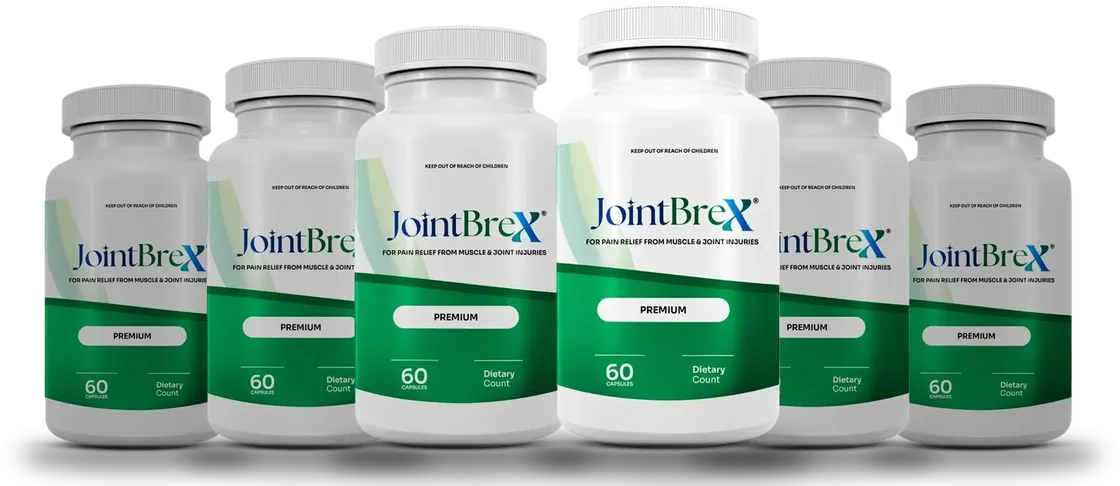
This gap matters most on the largest kit. Two capsules a day empties one 60-capsule bottle in 30 days, so a six-bottle order is a 180-day supply bought all at once. The roughly 30-day usable refund window closes long before that supply does.
Work through it in bottles rather than days. By the time day 31 arrives, most people taking two capsules a day have finished their first bottle and started a second. That leaves four bottles still sealed in the box at the exact point the real window is closing, not the 60-day point the badge implies.
| Kit | Days supplied | Bottles opened around day 30 | Bottles still sealed |
|---|---|---|---|
| 1 bottle | 30 | 1 | 0 |
| 3 bottles | 90 | 1 | 2 |
| 6 bottles | 180 | 1 to 2 | 4 to 5 |
None of this means a six-bottle order cannot be refunded. The policy applies to the order as a whole, not bottle by bottle, and a partial return of the sealed bottles is generally the mechanism for that situation. What it does mean is that the decision "does this work for me" and the decision "how many bottles should I buy at once" are, in practice, being asked to happen on two very different timelines. The refund window follows the first timeline. The pricing incentive to buy six at once follows the second, and the two do not meet in the middle.
A single bottle avoids this mismatch entirely, since 30 days of use and a roughly 30-day window line up about as closely as this policy structure allows. Every step up in kit size buys a lower price per bottle at the direct cost of that alignment, which is worth weighing against the per-bottle savings before you choose a size, not after the box arrives.
How to diarise it so it doesn't sneak past you
None of this is complicated once you write it down. It is easy to lose track of only because nothing on the order page does the subtraction for you.
The day you order, write down the date
Not the day the package arrives. The published terms count from the purchase date.Add 30 days and mark that date as "earliest to request a refund"
A request made before this date is not accepted under the published terms, regardless of how you feel about the product by then.Add 60 days and mark that date as "last day to request a refund"
This is the real deadline. Nothing about a badge or a follow-up email extends it.Set a reminder a few days before the 60-day mark, not on it
That gives you time to actually reach the order desk at +1 (302) 200-3480 if you decide to ask for a refund, rather than discovering the window closed while you were still deciding.If you ordered more than one bottle, decide your test period before you open bottle two
Once you've opened it, you're already inside the roughly 30-day window whether you meant to start it or not.If you've already lost track of the purchase date, check your order confirmation email first
It's sent the moment you check out, separate from any later shipping email, and it's the fastest way to reconstruct both deadlines if you've let time slip by.
A second reason to read the order page carefully
The 3-bottle kit is advertised at $59 a bottle, which multiplies to $177, while the same line also prints $207. Three times fifty-nine is one hundred and seventy-seven. We have flagged it rather than picked one.
A guarantee window that is shorter than it sounds and a total that is printed two different ways on the same line are two separate issues, but they share a lesson: the order page is not something to skim on the assumption the headline numbers are the whole story. Read the actual total you will be charged, and read the actual refund terms, before you click through, not after the charge posts.
Do the same kind of arithmetic here that we did with the refund window: three bottles at $59 each multiplies out to $177, plainly, and that is the figure that matches the per-bottle price advertised right next to it. The $207 figure printed on the same line does not match that multiplication, and we are not going to guess which one is the typo. What we can tell you is to check the total on the actual order form, not the summary line above it, before you confirm a purchase, and to keep a copy of the receipt either way.
Full detail on both kit pricing and the discrepancy itself is on the pricing page; the complete refund arithmetic, including the 60-and-30 figures above, is on the guarantee page.
A short method for reading any supplement guarantee
This same pattern, a generous-sounding headline number with a quieter condition attached, shows up on guarantees well beyond this one product. Four questions work on almost any supplement guarantee you come across.
What actually starts the clock?
Purchase date, delivery date and the date you open the first bottle are three different possible start points. Published terms usually pick one; assuming it's the most generous option without checking is how a window gets missed.
What conditions attach to the headline number?
A minimum-use requirement, like the 30 days here, is common and almost never printed next to the headline figure. Read the full terms page, not just the badge, to find it.
Who pays return shipping, and where does it go?
A guarantee that refunds your purchase price but leaves you covering tracked return shipping both ways is a smaller promise than it first sounds.
What does "satisfaction" actually require you to do?
Some guarantees ask for the product back, unopened or otherwise; others don't. That detail changes what "trying it" actually costs you if it doesn't work out.
None of these questions require distrust as a starting point. They just require reading the terms page once, the same way you would read a return policy before buying anything else, rather than trusting a badge to have already done that reading for you.
The habit generalizes well beyond supplements. A gym membership, a mattress trial, a software subscription and a skincare line all use some version of the same badge-plus-condition structure, and the same four questions apply to each one. The specific numbers change; the method for finding them does not.
Questions readers ask
How long is the real refund window if the guarantee is 60 days?
About 30 days, once a published 30-day minimum-use condition is subtracted from the 60-day total. The badge shows 60; the usable window is closer to 30.
Why can't I request a refund in the first 30 days?
Published terms require a minimum period of consistent use before a request is accepted, regardless of when you personally decide the product isn't working.
What does this mean for a six-bottle order specifically?
A six-bottle kit is a 180-day supply. The roughly 30-day usable refund window closes while someone taking two capsules a day typically still has four or five bottles sealed.
How do I keep track of my refund window?
Write down your purchase date, mark day 31 as the earliest eligible request date and day 60 as the deadline, and set a reminder a few days before day 60 so there's time to actually call.
Why does the 3-bottle kit show two different prices?
The order page advertises $59 a bottle, which multiplies to $177, while the same line also prints $207. We flag the mismatch rather than pick one; check the total on the order page before confirming.
What questions should I ask about any supplement guarantee, not just this one?
What starts the clock, what conditions attach to the headline number, who pays return shipping, and exactly what "satisfaction" requires you to send back or do.
Does a shorter real window mean the guarantee isn't genuine?
Not necessarily. It means the badge alone doesn't tell you the whole policy. Reading the full terms once tells you what you're actually working with.
Where can I find the exact refund terms and how to claim one?
The guarantee page has the full arithmetic; the refund policy page covers who to contact, what to send, and how long a credited refund takes to reach your card.
Keep reading
Turmeric Root Is Not Curcumin
Turmeric 100 mg and curcumin 500 mg are not the same claim. The arithmetic, the absorption problem, and a documented liv...
Read →What the GAIT Trial Found
GAIT, the largest glucosamine and chondroitin trial ever run, found a negative main result. Here is the subgroup, the do...
Read →How much does JointBrex cost?
Three kit sizes, what each one supplies, and the two pricing details worth checking first.
Read →Order JointBrex from the authorized retailer
60 servings per bottle, 1 to 2 droppers a day. Kits of 2, 3 or 6 bottles run from $49 a bottle on the sales page, with a 60-day money-back guarantee. Questions first? Call +1 (302) 200-3480.