JointBrex Ingredients List: Eight on the Label, Six on the Sales Pages
The JointBrex ingredients list on the label has eight, led by glucosamine sulfate at 1,000 mg, with seven smaller amounts and about 1,400.1 mg in total per serving. The retailer pack names six and the long sales page names a different six, so neither list is complete. The label is the authority. No strength figures are printed for the plant extracts, and the label says it contains crustacean shellfish (crayfish).
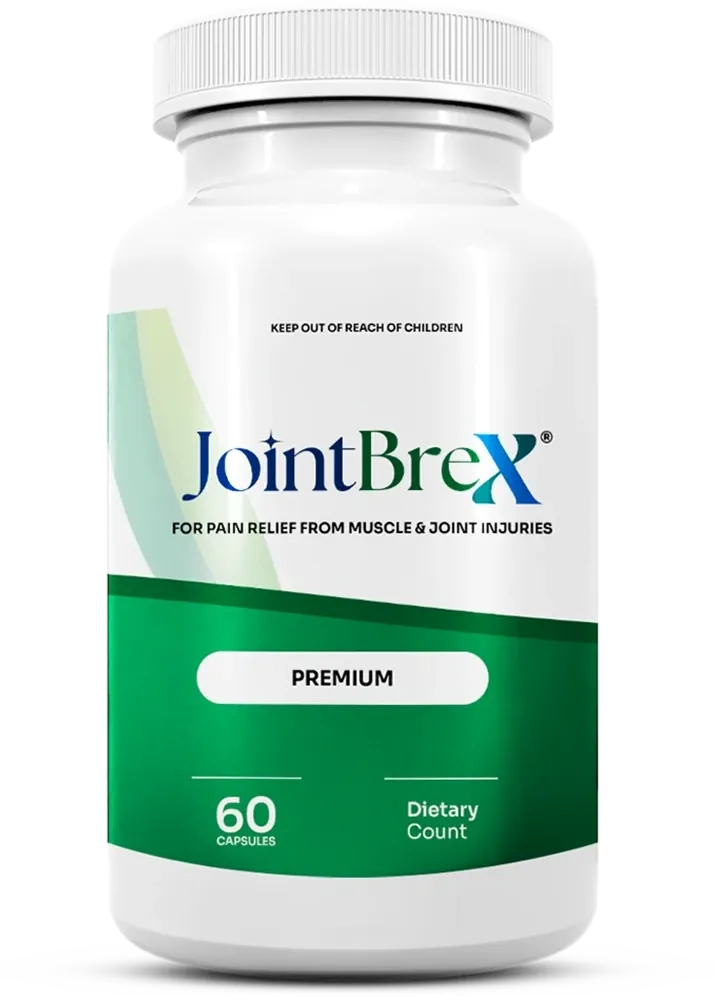
Key facts
- The Supplement Facts panel prints eight ingredients, each with its own amount, and no proprietary blend.
- The retailer pack names six: glucosamine, boswellia, chondroitin, turmeric, quercetin and methionine.
- The long sales page names a different six: glucosamine, chondroitin, boswellia, turmeric, MSM and bromelain.
- The printed amounts total about 1,400.1 mg a serving. No Daily Value is established for any of them.
- No strength figure is printed for boswellia, turmeric, quercetin or bromelain.
- Other ingredients are Cellulose (Vegetable Capsule) and Rice Flour. The label says it contains crustacean shellfish (crayfish).
- We build every comparison on the label, because the label is the regulated document.
The label is the same on every page, but the order page is where you can check the product name and count against what you have just read.
See today's price and guaranteeDisclosure: Jointbrexcare earns a commission if an order completes through this link. It does not change what you pay.
Does the JointBrex ingredients list show six ingredients or eight?
Eight, on the label. Six, on two seller documents that do not agree with each other. That is the whole puzzle, and it explains why searches for joint brex ingredients, joint brex ingredients list and jointbrex supplement facts can produce different answers.
The Supplement Facts panel on the bottle is the regulated part of the packaging. The retailer pack and the sales page are marketing material. When they differ, we follow the panel and show the difference.
Which ingredients does each document name?
| Ingredient | Label (8) | Retailer pack (6) | Long sales page (6) |
|---|---|---|---|
| Glucosamine sulfate | 1,000 mg | Named | Named |
| Boswellia extract | 133.3 mg | Named | Named |
| Chondroitin sulfate | 100 mg | Named | Named |
| Turmeric root | 100 mg | Named | Named |
| Quercetin | 16.7 mg | Named | Left out |
| Methionine | 16.7 mg | Named | Left out |
| MSM | 16.7 mg | Left out | Named |
| Bromelain | 16.7 mg | Left out | Named |
Read down the columns. The label names all eight. Each of the seller documents leaves out two. Why the lists differ is not published. The simplest reading is that the marketing copy was written before, or apart from, the final label.
What is each JointBrex ingredient, and what does the seller say it does?
The roles below are the seller's claims, not proven effects. We list them so you know the idea behind each line.
- Glucosamine sulfate. Described as a building block for cartilage. Derived from shellfish here.
- Chondroitin sulfate. Described as a substance that holds water in cartilage.
- Boswellia extract. A resin extract from Boswellia serrata, described as anti-inflammatory.
- Turmeric root. Root powder of Curcuma longa, described as anti-inflammatory.
- Quercetin. A plant pigment from the bud of Sophora japonica.
- Methionine. An amino acid. Plain methionine is not SAMe, which is the form the joint literature studies more often.
- MSM. Methylsulfonylmethane, a sulfur source.
- Bromelain. A pineapple enzyme, taken here from the stem.
A role in a sales story is not a measured result. The largest test of the cartilage idea, the GAIT trial, found no significant overall benefit over placebo at higher doses than this label prints (Clegg et al., 2006).
What is MSM in a joint supplement?
MSM stands for methylsulfonylmethane. It is a sulfur compound that supplement makers describe as a sulfur source. People ask what is msm joint supplement because it appears in many joint formulas.
In a randomised trial in knee osteoarthritis, MSM at 3.375 g a day (3,375 mg) for 12 weeks gave small improvements in physical function (Debbi et al., 2011). The label here prints 16.7 mg a serving. That is roughly half of one percent of the trial amount, so the trial cannot be read straight across to this bottle. Digestive upset and skin irritation have been reported mainly at gram-level doses.
What does the ingredient list not tell you?
Several useful details are not published. Look at how many items on this list are blank:
- A standardisation figure for the boswellia extract. The trials depend on it, for example a stated share of boswellic acids.
- Whether the turmeric is root powder or an extract, and what its curcumin content is. Root powder is roughly 0.6 to 3 percent curcumin.
- Any strength or activity unit for bromelain.
- Why the retailer pack and the sales page each name only six.
- Which glucosamine research the formula was modelled on, since it uses the sulfate form at a dose below the trials.
These gaps do not mean the product is bad. They mean the label gives you enough to compare amounts, but not enough to compare strength.
What do the dagger, the total and the other ingredients mean?
A dagger sits next to each amount because no Daily Value is established for any of them. That means there is no official yardstick on the label for high or low, not that an amount is just right. The panel is also not a proprietary blend, so each ingredient has its own number. That is better practice than hiding amounts inside a blend total.
Add the eight amounts and you get about 1,400.1 mg. Glucosamine sulfate alone is 1,000 mg of that, which is the large majority. The remaining seven lines share about 400 mg between them. Besides the actives, the label lists Cellulose (Vegetable Capsule) and Rice Flour.
Last, the allergen line: Contains: Crustacean shellfish (crayfish). The glucosamine here is the shellfish-derived ingredient.
Frequently asked questions
What are the JointBrex ingredients?
Glucosamine sulfate 1,000 mg, boswellia extract 133.3 mg, chondroitin sulfate 100 mg, turmeric root 100 mg, then quercetin, methionine, MSM and bromelain at 16.7 mg each, per two-capsule serving.
Why do some pages list six JointBrex ingredients?
The retailer pack and the long sales page each name six, but not the same six. Each leaves out two that the label prints. Why is not published.
Is there a proprietary blend in JointBrex?
No. Each of the eight ingredients has its own printed amount, though no strength figures are printed for the plant extracts.
What is MSM in JointBrex?
MSM is methylsulfonylmethane, a sulfur compound. The label prints 16.7 mg, while the knee trial we cite used 3,375 mg a day.
Does JointBrex contain anything besides the eight ingredients?
Yes. The other ingredients are Cellulose (Vegetable Capsule) and Rice Flour. The allergen line says it contains crustacean shellfish (crayfish).
Which JointBrex ingredient is dosed in the researched range?
Boswellia extract, at 133.3 mg against a studied 100 to 250 mg, though the label gives no standardisation. The other seven amounts sit below the doses used in research.
Our view
The eight-or-six question has a plain answer, and the plain answer is the label. Eight ingredients, eight printed amounts, no blend. Two seller documents each drop two of them, which is a reminder to trust the panel first and the artwork second.
The more important finding is not the count. It is what the list leaves blank: no strength for the plant extracts, no curcumin figure and no explanation of the mismatch. Those blanks are what you would want filled before you judge the formula.
If you want to compare a bottle with this list, buy through the official order link so the lot and panel can be checked with the order desk.
See today's price and guaranteeDisclosure: Jointbrexcare earns a commission if an order completes through this link. It does not change what you pay.
Last updated . This page is general information, not medical advice. JointBrex is a dietary supplement, it is not FDA approved, and no supplement is. Talk to a doctor or pharmacist about your own joint pain, your medicines and your health history.