Does JointBrex Work? What the Label and the Trials Allow Us to Say
Nobody can honestly say yes. No trial has tested JointBrex or its eight amounts together. Boswellia sits inside its studied range, but seven other ingredients sit below the doses used in research, and the largest glucosamine and chondroitin trial found no clear benefit over placebo. See a doctor for new, severe or injury pain.
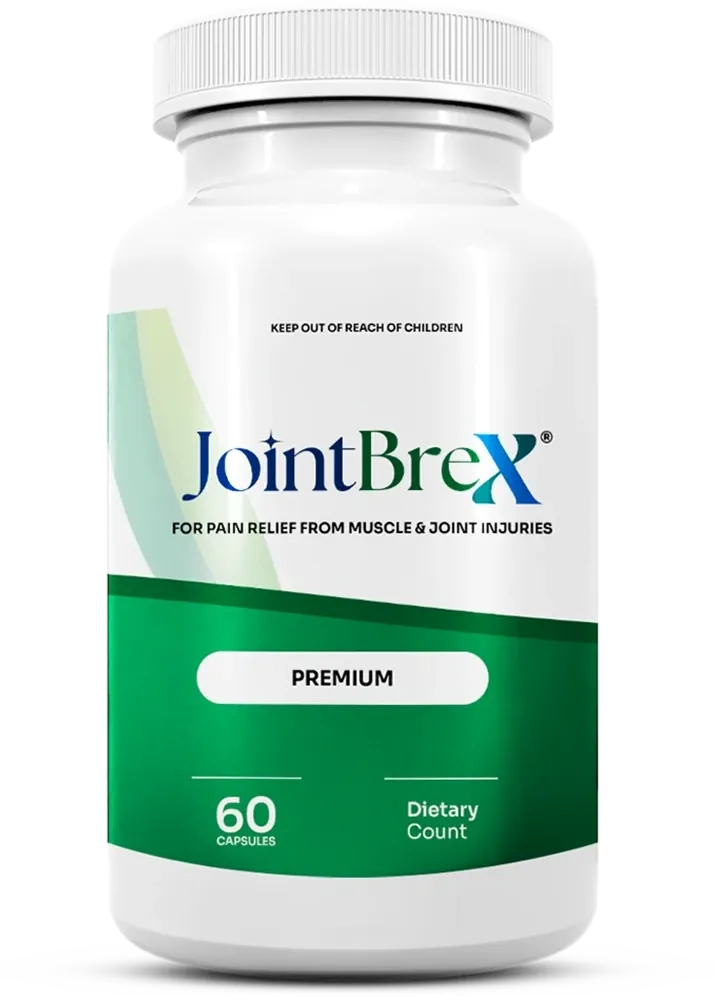
Key facts
- No trial of the finished JointBrex formula at these amounts is published.
- One serving is 2 vegetable capsules. A bottle holds 60 capsules, which is 30 servings.
- Boswellia extract at 133.3 mg is the one amount that falls in the 100 to 250 mg range used in research.
- Glucosamine sulfate is printed at 1,000 mg. The GAIT trial used 1,500 mg a day.
- Chondroitin sulfate is printed at 100 mg, one twelfth of the 1,200 mg used in GAIT.
- GAIT (1,583 patients, 24 weeks) found no significant overall benefit over placebo Clegg et al., 2006.
- The front of the label says “FOR PAIN RELIEF FROM MUSCLE & JOINT INJURIES”. That is a treatment claim, and this page does not repeat it as fact.
If you want to look at the real order page, you can read the kit sizes, the shipping terms and the guarantee text before you decide anything.
See today's price and guaranteeDisclosure: Jointbrexcare earns a commission if an order completes through this link. It does not change what you pay.
Does JointBrex work, yes or no?
People type this question in many ways. Does JointBrex work? Does Joint Brex actually work? Does JointBrex really work? Does the Joint Brex supplement work? Some even type Joint Brexit by mistake. The product name is JointBrex, and the honest answer is the same for every version of the question.
We do not know, and neither does anyone else. A claim that a product works needs a test of that product. No published trial has tested the eight-ingredient JointBrex formula at the amounts printed on its label. The seller has not published one either. So any page that says yes, or any page that says no, is going beyond what exists.
What we can do is read the label, line up each amount against the research people cite, and say where the gaps are. That is what the rest of this page does. It will not give you a verdict. It will give you the pieces so you can judge for yourself, and so you can ask a doctor better questions.
Think of three boxes. In the first box is what is known: the exact amounts on the label. In the second box is what the research on single ingredients found, mostly at other doses. In the third box is what nobody has tested: this exact mix, at these exact amounts. The question “does it work” lives in the third box, and that box is empty.
What would “works” even mean for a joint supplement?
“Works” can mean three different things, and they should not be mixed. The first is less pain. The second is less stiffness or easier movement. The third is a change in the joint itself, such as slower loss of cartilage seen on an X-ray.
In the GAIT trial, the one with 1,583 people, the pain measure did not separate the supplements from placebo overall. A two-year follow-up then looked at the joint itself and found that no group, including the prescription comparison drug, slowed joint-space loss in a way that met the trial's own bar Sawitzke et al., 2008. So even the best-funded test did not show the third kind of benefit.
That matters because a bottle can show any of the three on its marketing page without telling you which one it means. When you read a claim, ask which one it is, who measured it, and at what dose.
How does JointBrex work, according to its ingredients?
The ideas behind the eight ingredients are called proposed mechanisms. They are stories about how a molecule might act. They are not results.
- Glucosamine and chondroitin are proposed as raw material for cartilage.
- Boswellia and turmeric are proposed to dampen inflammatory signals.
- Bromelain is an enzyme from pineapple stem. MSM is a sulfur compound. Quercetin is a plant pigment. Methionine is an amino acid. Each has a proposed role, mostly as an antioxidant or a helper molecule.
These stories are fair starting points for research. The catch is that a good story is not a measured outcome. The cartilage story is the best known, and it is the one GAIT tested at higher doses than this label prints. It did not show a clear overall benefit.
Absorption is another open point. Plain curcumin is poorly absorbed. In one human study, 2,000 mg of curcumin alone gave barely detectable blood levels, while adding 20 mg of piperine from black pepper raised absorption a great deal Shoba et al., 1998. The JointBrex label names no piperine or other absorption aid.
Does each JointBrex ingredient reach the amount that was studied?
Here is the label, line by line, against the daily amount used in the research cited for each ingredient. Amounts are per 2-capsule serving, as printed.
| Ingredient | On the label | Studied daily dose | Where it sits |
|---|---|---|---|
| Glucosamine sulfate | 1,000 mg | 1,500 mg | Below |
| Boswellia extract | 133.3 mg | 100 to 250 mg | In range, but no standardisation printed |
| Chondroitin sulfate | 100 mg | 1,200 mg | One twelfth |
| Turmeric root | 100 mg | 500 to 1,000 mg of curcumin | Root powder, about 0.6 to 3 percent curcumin |
| Quercetin | 16.7 mg | 500 mg | About one thirtieth |
| MSM | 16.7 mg | 3,375 mg | About half of one percent |
| Bromelain | 16.7 mg | 800 mg | About 2 percent, and that dose did not beat placebo |
| Methionine | 16.7 mg | 1,500 mg | About 1 percent, and it is not SAMe |
Read the last column twice. Seven of the eight sit below the studied amount. One sits in range, and it is the one with a missing detail: the trials used boswellia extract standardised to a boswellic acid content, and the JointBrex label prints no such figure Yu et al., 2020. A newer trial of a 12.5 percent standardised extract saw a modest drop in pain when boswellia was used by itself López-Román et al., 2023.
What did the biggest glucosamine and chondroitin trial find?
GAIT was funded by the US National Institutes of Health. It ran at 16 centers, for 24 weeks, with 1,583 people who had painful knee osteoarthritis. People took glucosamine hydrochloride at 1,500 mg a day, chondroitin sulfate at 1,200 mg a day, both together, a prescription anti-inflammatory, or a dummy pill Clegg et al., 2006.
Overall, neither one nor the combination beat placebo by a significant margin. About 60 percent of the placebo group still met the trial's pain-response mark. A smaller slice of people with moderate-to-severe pain did better on the combination, but the authors called that exploratory.
A Cochrane review of 43 trials of chondroitin did find a modest pain benefit, mostly at 800 to 1,200 mg a day Singh et al., 2015. JointBrex prints 100 mg. So the mixed picture in the research does not rescue the label. It just shows how unsettled the field is, even at full doses.
Can you feel better and still not know if it worked?
Yes, and it happens to careful people. Joint pain rises and falls on its own. People often start a supplement in a bad week. A bad week is usually followed by a better one, with or without a capsule. This is called regression to the mean.
Add the placebo effect. In GAIT, about 60 percent of people on the dummy pill reported enough relief to count as a response. That is why trials need a placebo group. It is also why a single person's before-and-after story, positive or negative, cannot settle the question.
A friend's good result and a stranger's bad result are both weak evidence. Neither is a reason to ignore your own doctor. Our page on the reviews question explains why this site publishes no star ratings or quotes.
Does JointBrex work for knee pain or injuries?
The front of the bottle reads “FOR PAIN RELIEF FROM MUSCLE & JOINT INJURIES”. That sentence names an injury and promises relief. US rules treat that as a drug-style claim, not a claim a supplement may make FDA, 2000. The asterisk and the small disclaimer do not change the type of claim FTC, 2022.
So we do not say JointBrex relieves injury pain. Injury pain, a hot or swollen joint, or pain with fever needs a clinician, not a capsule Mayo Clinic, 2026 (joint pain).
For everyday knee stiffness in an adult, the guideline from the American College of Rheumatology and the Arthritis Foundation puts exercise, weight management where it applies, and self-management programs first. It conditionally recommends against glucosamine and chondroitin ACR and Arthritis Foundation, 2020.
Is JointBrex effective compared with other products?
People search for “JointBrex vs” and then a second name. We will not name other products here, and we have no head-to-head data for any of them. What we can offer is a method that works on any bottle.
- Find the Supplement Facts panel and write down each amount.
- Find the dose used in the research people cite for that ingredient.
- Divide one by the other. Note any ingredient with no amount printed.
- Check for standardisation figures on plant extracts such as boswellia and turmeric.
- Read the front-label claim, then read the fine print about the FDA.
Do the same steps for JointBrex and for any other product. If one bottle prints its amounts, discloses its extract strength and avoids treatment claims, it has answered more of your questions than one that does not. That is a statement about transparency. It is not a statement about results.
How could you test it fairly yourself?
If you and your doctor decide to try it, make the trial honest. Write down a baseline before the first capsule. Pick two or three plain measures, such as how many stairs before the knee complains, how many minutes the morning stiffness lasts, or how far you walk before you stop.
Take the label dose, two capsules daily before a meal. Keep your exercise and weight plans going. Do not change three things at once. Write a short note once a week, not every day.
Then decide in advance what result would make you stop, and what result would make you keep going. Remember that the published refund window is shorter than most trial lengths. The guarantee is 60 days from purchase, but listings also ask for 30 days of consistent use first, which leaves about 30 days to ask.
| Fact | What is published |
|---|---|
| Serving | 2 vegetable capsules, 30 servings per bottle |
| Label directions | Take two (2) capsules daily before a meal |
| Guarantee | 60 days from purchase, with a 30-day minimum-use condition |
| Trial length in research | Four weeks at the shortest, 24 weeks in GAIT |
| Published results timeline for this formula | Not published |
Frequently asked questions
Does JointBrex work?
No trial has tested this exact formula at these amounts, so nobody can show that it works. One ingredient, boswellia extract at 133.3 mg, is in its studied range. The other seven are below the amounts used in research.
Does Joint Brex actually work for joint pain?
That is not proven. The front label claims pain relief from muscle and joint injuries, but that wording is a treatment claim a supplement may not make. Pain from an injury needs a clinician.
How does JointBrex work?
The ingredients are proposed to act in different ways: building blocks for cartilage, calming inflammatory signals, or acting as antioxidants. These are theories. The largest trial of the cartilage idea did not find a clear overall benefit over placebo.
Is JointBrex effective compared with other products?
There is no head-to-head test, so no one can rank it. A fair comparison checks each label's amounts against the studied doses, checks for extract strength, and checks the claims on the front.
Could I feel better and not know why?
Yes. Joint pain changes from week to week, people often start a supplement during a bad week, and the placebo effect is strong for pain. A written baseline helps you tell a real change from noise.
What should I do first if my joint pain is new or severe?
See a clinician. New pain after an injury, a hot or swollen joint, or pain with fever should be checked by a doctor before you try any supplement.
Our view
We do not think the fair answer to “does JointBrex work” is yes or no. The fair answer is that the question has not been tested for this product. The label is detailed, which is good, and it shows seven of eight amounts below the studied doses, which is a real limit. One ingredient lands in range, and its missing standardisation figure keeps even that point open.
If you are an adult with mild everyday stiffness, no shellfish allergy and no blood thinner, a supplement may be one thing you try alongside exercise and weight care, with a written baseline and a doctor in the loop. It should not replace any of those. If you want the facts about price and the guarantee first, the order page shows them.
JointBrex is sold through one official checkout. You can look at the price, the shipping terms and the guarantee wording there, and decide at your own pace.
See today's price and guaranteeDisclosure: Jointbrexcare earns a commission if an order completes through this link. It does not change what you pay.
Last updated . This page is general information, not medical advice. JointBrex is a dietary supplement, it is not FDA approved, and no supplement is. Talk to a doctor or pharmacist about your own joint pain, your medicines and your health history.